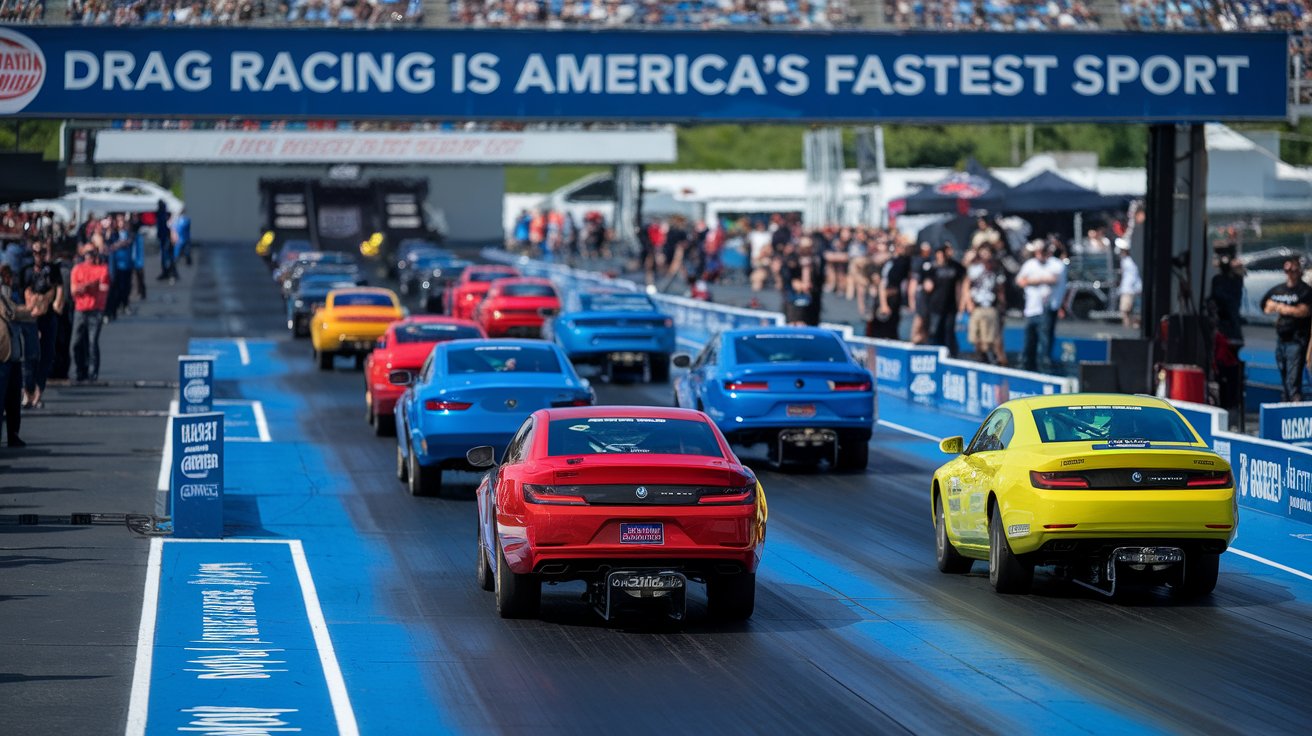
Drag racing is a high-speed motorsport competition where two vehicles race side-by-side down a straight, quarter-mile track in the shortest time possible. Originating in California during the late 1940s, this adrenaline-fueled sport has evolved into one of America’s most popular racing formats, featuring specialized vehicles that can exceed 330 mph and complete the distance in under four seconds. With professional sanctioning bodies like the National Hot Rod Association (NHRA) overseeing competitions across the United States, drag racing attracts millions of spectators annually.
How Drag Racing Works: The Fundamentals
Drag racing operates on a simple yet thrilling premise: two drivers compete in a straight-line acceleration race over a precisely measured distance, typically 1,000 feet or a quarter-mile (1,320 feet). The competition begins at the starting line, where vehicles stage in designated lanes after completing burnouts to heat their tires for optimal traction. An electronic timing system called the Christmas Tree initiates the race with a sequence of amber lights followed by a green light, signaling drivers to launch. The first vehicle to cross the finish line wins, with electronic sensors capturing exact elapsed times and trap speeds.
The reaction time measured from the green light to when the vehicle leaves the starting line is critical for competitive success. A perfect reaction time is 0.500 seconds in professional categories, while leaving too early results in a red-light foul and automatic disqualification. Each run generates detailed performance data including 60-foot time, 330-foot time, eighth-mile elapsed time, and terminal velocity. Modern drag strips feature sophisticated timing equipment, shutdown areas for safe deceleration, and return roads for competitors to rejoin the staging lanes. Safety protocols mandate helmets, fire-resistant suits, and vehicle safety equipment depending on performance levels.
The History and Evolution of Drag Racing
The origins of drag racing trace back to post-World War II America when returning servicemen began racing their modified vehicles on dry lakebeds and abandoned airstrips in Southern California. The term “drag” likely derives from the main street or “main drag” where illegal street racing occurred throughout the 1940s. Recognizing the need for organized, safe competition venues, automotive enthusiast Wally Parks founded the National Hot Rod Association in 1951 to establish standardized rules and sanctioned racing facilities. The first official NHRA-sanctioned event took place at the Los Angeles County Fairgrounds in 1953, marking the beginning of organized drag racing in the United States.
Throughout the 1960s and 1970s, drag racing technology advanced dramatically with the development of specialized fuel mixtures, aerodynamic body designs, and purpose-built racing engines. The introduction of Top Fuel dragsters capable of reaching 200 mph captured national attention and established drag racing as a legitimate professional motorsport. By 2026, the sport has evolved into a multi-million dollar industry with corporate sponsorships, television coverage, and technological innovations including data acquisition systems and computer-controlled engine management. Modern professional drag racing features events at over 20 NHRA Member Tracks nationwide, attracting hundreds of thousands of spectators annually and generating significant economic impact for host communities across the United States.
Professional Drag Racing Classes
Professional drag racing encompasses numerous vehicle classes, each with specific rules governing engine size, fuel type, vehicle weight, and aerodynamic modifications. The classification system ensures fair competition between similarly equipped vehicles while allowing innovation within established parameters. Understanding these classes helps explain why drag racing appeals to diverse audiences from grassroots enthusiasts to corporate sponsors investing millions in professional teams.
Top Fuel: The Pinnacle of Drag Racing
Top Fuel dragsters represent the fastest accelerating vehicles on Earth, capable of reaching 330 mph in just 3.6 seconds over 1,000 feet. These purpose-built machines feature 11,000-horsepower supercharged engines burning nitromethane fuel at a rate of 15 gallons per run. The extreme forces involved require specialized carbon fiber chassis construction, five-point safety harnesses, and parachute braking systems. Top Fuel competition demands precision tuning as engines must be completely rebuilt after every run due to the extraordinary stresses involved. In 2026, Top Fuel remains the premier category in NHRA Camping World Drag Racing Series competition, with professional teams investing over two million dollars annually in their racing programs.
Funny Car: High-Speed Showmanship
Funny Cars combine Top Fuel performance with recognizable automotive body shapes, creating spectacular visual appeal for spectators. These vehicles feature a one-piece carbon fiber body that tilts forward for engine access, mounted over a tube-frame chassis with similar powerplants to Top Fuel dragsters. The aerodynamic body designs create significant downforce at high speeds while maintaining the silhouette of production vehicles from manufacturers like Chevrolet, Ford, and Toyota. Funny Car racing typically produces elapsed times in the 3.8-second range with speeds exceeding 330 mph, making them nearly as fast as Top Fuel dragsters. The category’s combination of raw speed and brand recognition makes Funny Cars extremely popular with corporate sponsors and racing fans throughout the United States.
Sportsman Drag Racing Classes
Sportsman racing provides competitive opportunities for thousands of racers nationwide using production-based vehicles with varying levels of modification. These categories form the foundation of drag racing participation, allowing enthusiasts to compete with street-legal vehicles or purpose-built race cars within budget-conscious frameworks. The diversity of sportsman classes ensures accessibility for competitors across different skill levels and financial resources.
Pro Stock: Factory Hot Rods
Pro Stock vehicles maintain the outward appearance of production automobiles while featuring highly modified naturally aspirated V8 engines producing over 1,400 horsepower. Strict rules mandate steel body panels, functioning doors, and production-based engine blocks, creating the illusion of street cars capable of 6.4-second elapsed times at 212 mph. The technical sophistication required for Pro Stock competition rivals any professional motorsport, with teams employing computer modeling, wind tunnel testing, and precision engine building techniques. This class particularly appeals to automotive manufacturers as a proving ground for performance technology with direct marketing connections to showroom vehicles. In 2026, Pro Stock remains a cornerstone professional category with factory support from major manufacturers.
Pro Stock Motorcycle: Two-Wheeled Thunder
Pro Stock Motorcycle competition showcases purpose-built racing motorcycles with turbocharged or supercharged four-cylinder engines producing over 400 horsepower. These specialized machines require extraordinary rider skill as they accelerate to 200 mph in under seven seconds while maintaining control on two wheels. The physical demands on motorcycle drag racers exceed most motorsports, with riders experiencing multiple g-forces during acceleration while managing clutch and throttle inputs with split-second precision. Modern Pro Stock Motorcycles utilize sophisticated electronics for launch control and data acquisition, though ultimate success depends on rider ability and courage. The class maintains strong manufacturer involvement from Harley-Davidson, Suzuki, and other motorcycle brands competing for racing supremacy.
Top Alcohol Classes: The Path to Professional Racing
Top Alcohol categories serve as developmental platforms for aspiring professional racers while providing exciting competition for experienced teams. These classes utilize methanol fuel instead of nitromethane, reducing costs while maintaining impressive performance capabilities. The two primary divisions offer distinct vehicle configurations appealing to different racing philosophies.
Top Alcohol Dragster Performance
Top Alcohol Dragsters feature front-engine configurations with supercharged powerplants producing approximately 3,500 horsepower on methanol fuel. These vehicles complete the quarter-mile in 5.1 seconds at speeds exceeding 280 mph, providing spectacular performance at significantly lower operating costs than Top Fuel. Many successful professional drag racers developed their skills competing in Top Alcohol Dragster before advancing to nitromethane categories. The class attracts serious competitors seeking a balance between performance and affordability, with typical racing budgets ranging from $300,000 to $500,000 annually. Regional and national competitions provide multiple opportunities for racers to compete at NHRA Member Tracks throughout the United States.
Top Alcohol Funny Car Competition
Top Alcohol Funny Cars replicate their nitromethane-burning counterparts with shorter wheelbases and methanol-fueled engines. The combination of lightweight construction and supercharged power creates vehicles running 5.3-second elapsed times at 270 mph while maintaining the distinctive Funny Car appearance. Competitors appreciate the Top Alcohol Funny Car category for its lower operational costs compared to professional Funny Cars while delivering thrilling side-by-side racing action. The class has produced numerous racers who later achieved professional success, establishing its reputation as an effective training ground. In 2026, approximately 60 active Top Alcohol Funny Cars compete at NHRA Lucas Oil Drag Racing Series events nationwide.
Grassroots Drag Racing Categories
Grassroots drag racing encompasses the vast majority of participants competing at over 200 sanctioned facilities across the United States. These categories emphasize affordability, accessibility, and close competition using production-based vehicles with limited modifications. The diversity of grassroots classes ensures that virtually any vehicle can find appropriate competition, from vintage muscle cars to modern sport compacts.
Super Stock: Modified Production Cars
Super Stock vehicles begin as factory production automobiles with permitted engine modifications, weight reduction, and upgraded suspension components. The class features a complex index system where different make-and-model combinations receive assigned performance targets ensuring competitive balance. Successful Super Stock racing requires exceptional driving consistency as races are often decided by thousandths of a second. The category maintains strong appeal among brand loyalists who enjoy campaigning modified versions of their favorite production vehicles. Modern Super Stock competition includes vehicles from the 1960s muscle car era through contemporary performance models, creating diverse and interesting racing fields.
Super Street: Weekend Warrior Class
Super Street provides competition for street-legal vehicles with moderate modifications including upgraded engines, transmissions, and suspension systems. The class mandates functioning lights, wipers, and mufflers, ensuring vehicles maintain practical street capability while delivering competitive performance. Competitors typically achieve elapsed times in the 9 to 11-second range depending on specific vehicle configuration and driver skill. Super Street drag racing attracts enthusiasts who enjoy the dual-purpose nature of competitive vehicles that can be driven to the track, raced, and driven home. The relatively accessible performance requirements make this category extremely popular at local tracks throughout the country.
Sportsman Handicap Categories
Handicap racing enables vehicles with vastly different performance capabilities to compete directly through a staggered starting system. These categories emphasize driver consistency and reaction time rather than outright speed, creating exciting competitions where any competitor can win regardless of vehicle performance. The handicap format has become increasingly popular as it maximizes participation and competitive opportunities.
Top Dragster Competition Format
Top Dragster represents the fastest handicap category featuring purpose-built race cars running elapsed times from 6.0 to 7.9 seconds. Competitors choose a dial-in time representing their anticipated performance, then race against opponents with different dial-ins using a handicap start. The winner is determined by who comes closest to their dial-in without running faster, creating strategic depth beyond pure acceleration. Top Dragster racing requires sophisticated vehicles with consistent performance capabilities, typically costing between $75,000 and $200,000 to build and maintain. The class attracts serious sportsman racers seeking competitive opportunities with relatively open technical rules allowing diverse vehicle configurations from rear-engine dragsters to modified door cars.
Top Sportsman Door Car Racing
Top Sportsman follows identical competition format to Top Dragster but requires full-bodied door cars rather than open-wheel dragsters. This category showcases heavily modified vehicles retaining recognizable automotive body shapes with elapsed times ranging from 6.0 to 7.9 seconds at speeds exceeding 180 mph. The door car requirement appeals to racers preferring traditional hot rod aesthetics while competing in a highly competitive handicap format. Top Sportsman competition has experienced significant growth in recent years as technological advances make six-second performance achievable with various combinations. Modern entries include everything from 1930s coupes to contemporary muscle cars, all built to extremely high standards with sophisticated chassis, aerodynamics, and power plants.
Factory Stock and Stock Eliminator
Factory Stock racing showcases late-model production vehicles with minimal permitted modifications, maintaining close connection to showroom automobiles. The class was reintroduced by NHRA in 2018 to feature current factory performance vehicles like the Chevrolet COPO Camaro, Ford Cobra Jet Mustang, and Dodge Challenger Drag Pak. These purpose-built limited-production drag racing vehicles come directly from manufacturer performance divisions with specifications controlled to ensure competitive parity. Factory Stock competition generates significant spectator interest as fans can relate to vehicles resembling those available at dealerships, creating strong marketing value for participating manufacturers.
Stock Eliminator features vintage production vehicles from the 1960s through early 2000s competing under original factory specifications with minimal permitted modifications. The class uses a complex classification system assigning indexes based on original performance capabilities, allowing fair competition between significantly different vehicles. Successful Stock Eliminator racing requires locating rare factory performance combinations with favorable index assignments, creating ongoing demand for obscure high-performance production vehicles. Competitors invest substantial resources in restoration and preservation of these historic automobiles while competing for regional and national championships. The category maintains strong nostalgia appeal while providing competitive opportunities for vehicles that might otherwise sit in collections.
Top Fuel Harley: Motorcycle Nitro Power
Top Fuel Harley represents the most extreme form of motorcycle drag racing, featuring Harley-Davidson-powered machines burning nitromethane fuel and producing over 1,500 horsepower. These specialized motorcycles accelerate to 240 mph in approximately six seconds, creating one of motorsport’s most challenging riding experiences. The category maintains strict technical requirements mandating Harley-Davidson engine architecture while permitting extensive modifications including supercharging, exotic materials, and purpose-built frames. Top Fuel Harley racing appeals to a dedicated community of Harley enthusiasts seeking the ultimate expression of American V-twin performance. The physical demands on riders are extraordinary as they manage immense power while maintaining vehicle control during violent acceleration and high-speed runs.
In 2026, Top Fuel Harley continues as a featured class at select NHRA national events, though the participant count remains smaller than other professional categories due to significant technical and financial barriers. Building and maintaining competitive equipment requires budgets exceeding $200,000 annually along with specialized knowledge of nitromethane tuning for air-cooled V-twin engines. Despite these challenges, the class maintains strong spectator appeal due to its uniquely American character combining Harley-Davidson heritage with extreme performance. The thunderous sound and visual spectacle of nitro-burning motorcycles launching creates memorable experiences that distinguish drag racing from other motorsports.
Drag Racing vs Other Motorsports
When comparing drag racing to Formula 1, the performance metrics reveal dramatically different engineering priorities. Top Fuel dragsters accelerate faster than F1 cars, reaching 100 mph in less than one second compared to approximately 2.6 seconds for F1 vehicles. However, Formula 1 cars achieve higher top speeds exceeding 220 mph in race trim while navigating complex circuits requiring advanced aerodynamics, suspension systems, and braking capabilities. Drag racing focuses exclusively on straight-line acceleration over short distances, while F1 emphasizes sustained high-speed cornering and endurance over 190-mile races. The technological approaches differ fundamentally, with drag racing prioritizing instantaneous power delivery and traction management versus F1’s balance between speed, handling, and fuel efficiency over extended competition periods.
The difference between drag racing and traditional circuit racing extends beyond technical specifications to competitive format and spectator experience. Circuit racing features multiple competitors simultaneously racing for extended periods, while drag racing presents head-to-head elimination rounds with each race lasting seconds. This fundamental distinction makes drag racing more accessible to casual spectators who can easily understand the competition format without extensive racing knowledge. Additionally, drag racing costs vary dramatically across different classes, with grassroots categories accessible for under $10,000 while professional teams invest millions annually, creating participation opportunities across diverse economic backgrounds unlike most professional motorsports requiring substantial financial resources regardless of competition level.
Drag Racing Equipment and Technology
Modern drag racing equipment incorporates sophisticated technology across all competition levels, from grassroots sportsman classes to professional categories. Data acquisition systems monitor hundreds of parameters during each run including engine RPM, throttle position, cylinder pressure, boost levels, and chassis behavior. Professional teams analyze this information between rounds to optimize performance, making minute adjustments to ignition timing, fuel delivery, and suspension settings. Drag racing technology in 2026 includes computer-controlled engine management systems, active suspension components, and advanced materials like carbon fiber composites that were exotic just decades earlier. Safety equipment has evolved dramatically with innovations including advanced fire suppression systems, impact-absorbing chassis structures, and head-and-neck restraint devices protecting competitors during the extreme forces experienced during acceleration and potential incidents.
Drag racing tires represent critical components with specialized compounds and construction methods varying by class requirements. Top Fuel and Funny Car utilize massive rear slicks measuring 36 inches tall and 17.5 inches wide, operating at low air pressure to maximize contact patch size during launch. These specialized tires can only survive a single full-power run before requiring replacement. Sportsman categories use various tire specifications from street-legal DOT-approved compounds to purpose-built racing slicks depending on class regulations. Modern tire technology incorporates sophisticated compounds providing incredible grip while surviving the extreme temperatures and forces generated during acceleration. Understanding proper tire selection, preparation, and pressure settings significantly impacts competitive success across all drag racing categories.
Understanding Drag Racing Legality and Safety
The question of whether drag racing is illegal depends entirely on location and circumstances. Street racing on public roads remains illegal throughout the United States, with consequences including vehicle impoundment, license suspension, substantial fines, and potential criminal charges. However, organized drag racing at sanctioned facilities operates completely legally under established safety regulations and local ordinances. Over 200 NHRA Member Tracks nationwide provide legal venues where enthusiasts can test their vehicles in controlled environments with emergency services, safety equipment, and proper insurance coverage. Law enforcement agencies often partner with local tracks to promote legal racing opportunities as alternatives to illegal street racing, recognizing that providing appropriate outlets reduces dangerous public road activity.
Drag racing safety protocols have evolved significantly since the sport’s early days, with comprehensive regulations governing track design, vehicle construction, and required safety equipment. Modern facilities feature extensive shutdown areas, crash barriers, and emergency response capabilities including fire suppression equipment and trained medical personnel. Vehicle safety requirements scale with performance levels, mandating items like roll cages, fire suppression systems, parachutes, and safety harnesses based on elapsed time thresholds. The NHRA rulebook contains hundreds of pages detailing specific requirements ensuring participant and spectator safety. Despite the extreme speeds involved, drag racing maintains an excellent safety record due to these comprehensive regulations and their consistent enforcement at sanctioned events nationwide.
Drag Racing for Kids and Beginners
Drag racing for kids begins with junior programs designed to introduce youth to motorsports in safe, age-appropriate environments. The NHRA Junior Drag Racing League accommodates children ages 5 through 17 using half-scale dragsters with restricted performance capabilities appropriate for young drivers. These programs emphasize safety, sportsmanship, and mechanical education while developing driving skills in a controlled competitive format. Participants compete at local tracks throughout the racing season with opportunities to advance to regional and national events. Junior dragster racing costs significantly less than adult categories with complete race-ready vehicles available from $3,000 to $15,000, making it accessible for families seeking affordable motorsports participation. Many current professional racers began their careers in junior programs, demonstrating the effectiveness of youth development initiatives.
For adults new to the sport, beginner drag racing opportunities exist through various entry-level classes and track programs. Many facilities offer “test and tune” sessions where anyone with a valid driver’s license and street-legal vehicle can experience drag racing after completing brief safety orientations. Street car classes provide competitive opportunities using unmodified daily drivers, eliminating the need for purpose-built race vehicles. Most tracks employ experienced staff who assist newcomers with understanding procedures, proper staging techniques, and safety protocols. Drag racing schools operated by professional organizations offer comprehensive instruction covering vehicle setup, driving techniques, and race strategy. The welcoming nature of the drag racing community ensures beginners receive support and mentorship as they develop their skills and understanding of this exciting motorsport.
Drag Racing Courses and Track Design
A standard drag racing course consists of several distinct sections designed to facilitate safe competition while accommodating spectators and competitors. The staging lanes provide space for vehicles awaiting their competitive runs, allowing crews to make final adjustments and perform burnouts. The competition surface itself measures 60 feet wide to accommodate two lanes separated by a centerline barrier, with the racing distance traditionally a quarter-mile (1,320 feet) though many facilities now use 1,000-foot courses for professional nitro categories. Modern tracks feature concrete or specially prepared asphalt surfaces with exceptional grip characteristics enhanced by applying traction compounds. Electronic timing systems using infrared beams measure every aspect of performance from reaction time through finish line speed. The shutdown area extends well beyond the finish line, providing distance for safe deceleration with sand traps or barriers to contain vehicles unable to stop normally.
Professional drag strip design in 2026 incorporates sophisticated engineering ensuring optimal safety and performance. The starting line area features recessed timing blocks and prestage/stage beams precisely calibrated to ensure accurate reaction time measurement. Modern facilities include climate-controlled timing towers with video review capabilities, professional-grade sound systems, and comprehensive spectator amenities. Return roads allow competitors to rejoin staging lanes without interfering with ongoing competition. Track preparation represents critical work with specialized equipment applying traction compounds and removing rubber buildup to maintain consistent surface conditions throughout race events. Leading facilities invest millions in maintenance and upgrades to provide world-class competition venues meeting NHRA specifications while accommodating thousands of spectators in comfortable viewing areas with unobstructed sightlines of the entire racing surface.
Related video about what is drag racing
This video complements the article information with a practical visual demonstration.
Your questions answered
How do you explain drag racing to someone unfamiliar with motorsports?
Drag racing is a competition where two vehicles race side-by-side in a straight line to see which can cover a set distance (typically a quarter-mile or 1,000 feet) in the shortest time. Unlike other forms of racing with multiple laps and turns, drag races last only seconds and focus purely on acceleration from a standing start. The sport ranges from street-legal daily drivers to 330-mph professional machines, making it accessible to various participants while offering spectacular entertainment. Electronic timing systems measure performance to thousandths of a second, determining winners in extremely close races. The combination of intense acceleration, thunderous engines, and simple competitive format makes drag racing easy to understand and exciting to watch even for motorsports newcomers.
Why do they call it drag racing and where did the name originate?
The term “drag racing” most likely originated from 1940s slang referring to the “main drag” or main street where illegal street racing occurred in American cities. Young enthusiasts would race their modified vehicles on these thoroughfares, and the activity became known as racing on the drag. Another theory suggests the term relates to dragging or racing down strips of roadway. When organized sanctioning bodies like the NHRA formed in the early 1950s to move racing from streets to dedicated facilities, the name drag racing stuck and became the official terminology for the sport. Today the term is universally recognized worldwide, though the sport remains most popular in the United States where it originated over 75 years ago.
Is drag racing faster than Formula 1 in terms of acceleration?
Yes, Top Fuel dragsters accelerate significantly faster than Formula 1 cars due to their specialized design focused solely on straight-line acceleration. A Top Fuel dragster reaches 100 mph in under 0.8 seconds and can complete a quarter-mile in 3.6 seconds at over 330 mph. In comparison, F1 cars require approximately 2.6 seconds to reach 100 mph and have top speeds around 220 mph on race circuits. However, F1 cars excel in areas where dragsters cannot compete including cornering ability, sustained high-speed performance over distance, and braking capability. The comparison illustrates how different engineering priorities create specialized vehicles optimized for their specific competition formats. Drag racing prioritizes instantaneous acceleration while F1 balances multiple performance factors for circuit racing.
What is the main difference between drag racing and traditional circuit racing?
The fundamental difference is that drag racing involves two vehicles competing head-to-head in a straight line over a short distance lasting seconds, while circuit racing features multiple competitors simultaneously racing on closed courses with turns over extended distances lasting minutes to hours. Drag racing uses an elimination format where winners advance through rounds until a champion is determined, whereas circuit racing awards points based on finishing position in each event. The technical requirements also differ dramatically, with drag racing vehicles optimized purely for acceleration and lacking the aerodynamics, suspension sophistication, and fuel efficiency required for circuit racing. Spectators can watch entire drag races from one location while circuit racing requires viewing from various points or video screens to follow competitors around the track. These distinctions make drag racing more accessible to casual fans while circuit racing appeals to those appreciating strategic complexity and endurance.
How much does it cost to get started in drag racing in 2026?
Getting started in drag racing costs anywhere from zero dollars to tens of thousands depending on your approach and competitive ambitions. Many tracks offer test-and-tune sessions where you can race your existing street-legal vehicle for $20 to $40 entry fees after passing basic safety inspection. For competitive sportsman racing, building a dedicated race car typically requires $10,000 to $50,000 for entry-level classes like Super Street or bracket racing categories. Junior dragster programs for kids start around $3,000 to $8,000 for complete ready-to-race packages. More serious sportsman competition in classes like Super Stock or Top Sportsman demands $75,000 to $200,000 investments for competitive equipment. Professional categories require multi-million dollar budgets with corporate sponsorship. The beauty of drag racing is the wide range of participation levels available, allowing enthusiasts to compete within virtually any budget while enjoying the same sport professionals compete in.
What safety equipment is required for drag racing at sanctioned tracks?
Drag racing safety equipment requirements vary based on vehicle performance level, with faster cars requiring more extensive protection. Basic street legal vehicles need functioning seatbelts, while cars running under 13.99 seconds require approved racing helmets. Vehicles running 11.49 to 9.99 seconds must have racing seats, five-point harnesses, and driveshaft loops. Cars exceeding 9.99 seconds require full roll cages, fire suppression systems, racing fuel cells, window nets, and fire-resistant driver suits. The fastest professional categories mandate additional equipment including parachutes for speeds over 150 mph, multiple fire suppression systems, advanced chassis structures, and head-and-neck restraint devices. All requirements are detailed in the NHRA rulebook with strict enforcement at sanctioned tracks. These comprehensive regulations ensure participant safety across all competition levels while scaling requirements appropriately to the risks associated with different performance thresholds.
| Drag Racing Aspect | Key Details | Why It Matters |
|---|---|---|
| Competition Format | Head-to-head eliminations over 1,000 feet or quarter-mile in 3-15 seconds | Simple, exciting format easily understood by all spectators |
| Entry Levels | From street-legal test-and-tune to multi-million dollar professional teams | Accessible to virtually any budget and skill level |
| Top Performance | Top Fuel dragsters: 330+ mph, 11,000 HP, 3.6-second quarter-mile | Fastest accelerating vehicles on Earth create spectacular entertainment |
| Safety Standards | Comprehensive requirements scaled to performance levels at 200+ sanctioned tracks | Legal, regulated competition eliminates illegal street racing dangers |
| Competition Classes | Over 200 different categories from junior dragsters to professional nitro | Ensures fair competition and opportunities for all vehicle types |
| Technology | Advanced data systems, materials, and engineering across all levels | Continuous innovation pushes performance boundaries while improving safety |