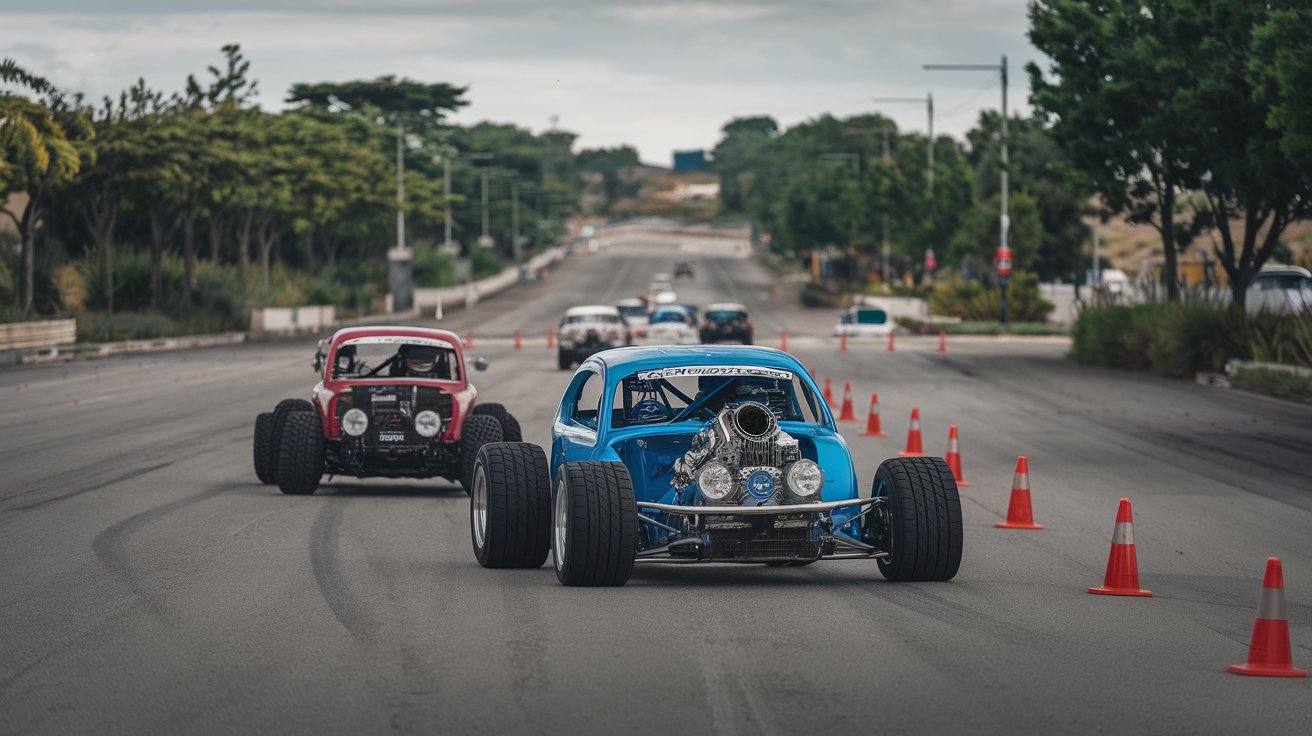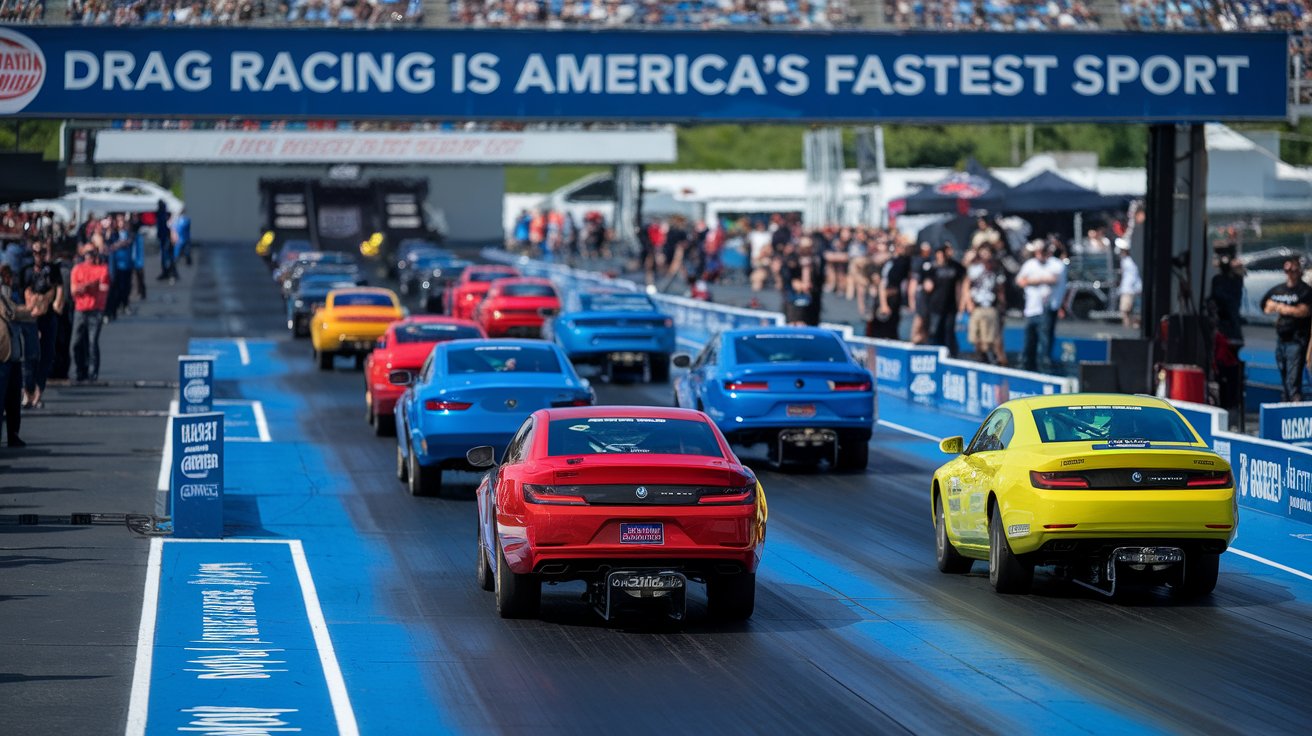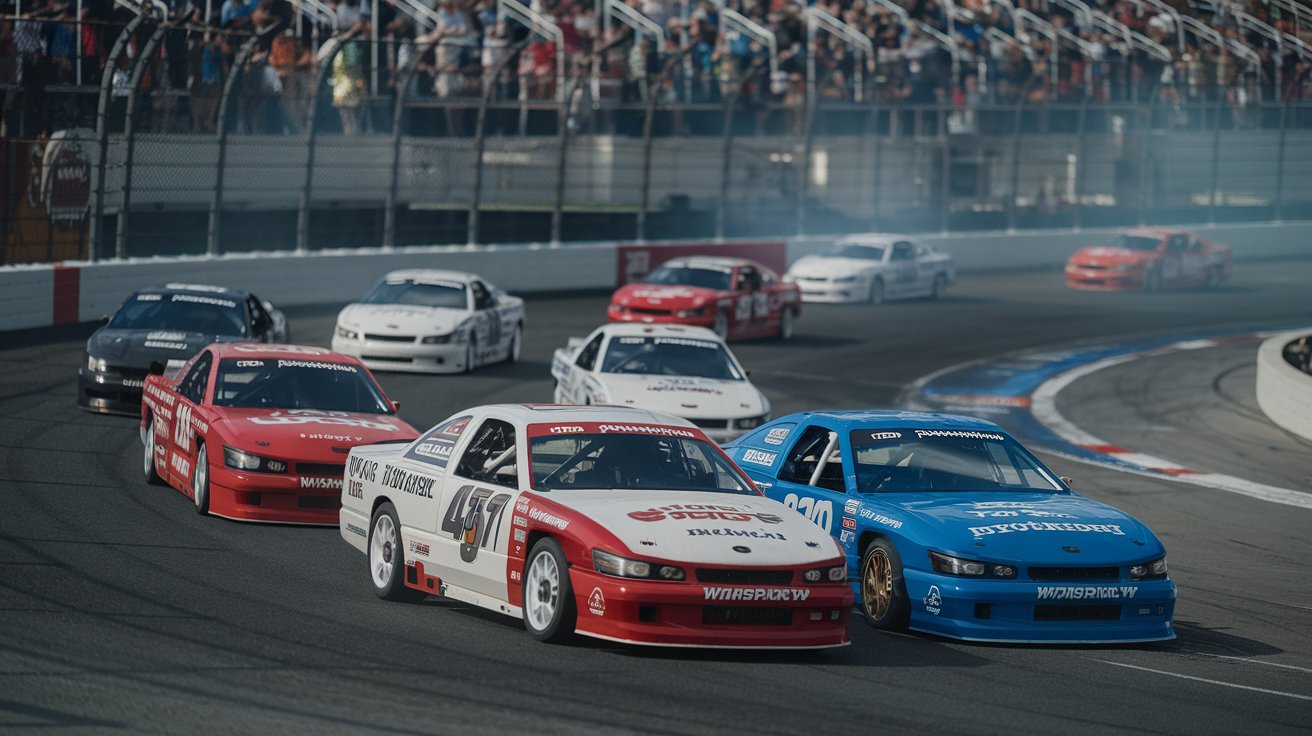
Stock car racing is a form of automobile racing that originated in the United States, where vehicles based on production car models compete on oval tracks and road courses. Unlike open-wheel racing or formula cars, stock cars maintain the basic silhouette and chassis structure of regular passenger vehicles, though modern race cars feature extensive modifications for safety and performance. This motorsport has become deeply embedded in American culture, with NASCAR serving as the most prominent sanctioning body for stock car racing in the United States since 1948.
The Origins and Definition of Stock Car Racing
Stock car racing emerged in the 1920s and 1930s when drivers would race their personal automobiles against each other, often on dirt tracks or beach courses. The term “stock” originally referred to vehicles that were completely stock or unmodified from their factory specifications. During the Prohibition era, bootleggers modified their cars to outrun law enforcement, and after Prohibition ended in 1933, these drivers sought legitimate competition venues. These modified vehicles became the foundation for organized stock car racing in America.
By 2026, the definition has evolved significantly. Modern stock cars retain only the general appearance of production vehicles while incorporating purpose-built racing chassis, roll cages, specialized suspension systems, and powerful engines. The NASCAR Cup Series, for example, uses the Next Gen car introduced in 2022 and refined through 2026, which features a spec chassis with manufacturer-specific body panels that create the distinctive Ford Mustang, Chevrolet Camaro, and Toyota Camry appearances. The connection to actual stock passenger cars exists primarily in aerodynamic design and brand identity rather than mechanical components.
Why Is It Called Stock Car Racing?
The name “stock car racing” originates from the early days when participants raced vehicles directly from dealer inventory with minimal modifications. In the 1930s and 1940s, racing organizations required cars to be “stock” from the factory, meaning drivers competed in the same automobiles available to ordinary consumers. This requirement ensured competitive balance and allowed spectators to connect with vehicles similar to those they drove daily. The term reflected the actual stock nature of the racing machines.
Although modern stock cars bear little mechanical resemblance to showroom models, the name persists due to historical tradition and marketing considerations. NASCAR and other sanctioning bodies maintain this terminology because it preserves the sport’s connection to American automotive manufacturing and consumer culture. The difference between contemporary race cars and production vehicles is substantial, yet manufacturers invest heavily in stock car racing programs because victory on Sunday still sells cars on Monday. The name serves as a bridge between cutting-edge motorsports technology and the everyday driving experience of millions of Americans.
Stock Car Racing vs NASCAR: Understanding the Relationship
NASCAR (National Association for Stock Car Auto Racing) is the largest and most prominent sanctioning body for stock car racing in the United States, but the two terms are not synonymous. Stock car racing represents the broader motorsport category, while NASCAR is one specific organization that governs and promotes races within this category. The relationship is similar to how football is a sport and the NFL is a league that organizes professional football competition.
Other stock car racing organizations operate throughout the United States in 2026, including the ARCA Menards Series (now owned by NASCAR), local and regional sanctioning bodies, and independent racing associations. These organizations feature various rules, vehicle specifications, and competition levels. NASCAR operates three national touring series: the Cup Series (premier level), Xfinity Series (second tier), and Craftsman Truck Series (pickup truck-based racing). Additionally, numerous regional NASCAR series exist across the country. The difference lies in scope, budget, media coverage, and technical regulations, but all fall under the stock car racing umbrella.
Different Types of Stock Car Racing
The United States features multiple types of stock car racing that cater to various skill levels, budgets, and regional preferences. Understanding these categories helps enthusiasts appreciate the sport’s diversity and accessibility across American motorsports culture.
Professional National Series
The NASCAR Cup Series represents the pinnacle of American stock car racing, featuring 36 points-paying races annually across oval tracks, road courses, and unique venues like street circuits. As of 2026, the series utilizes the Next Gen car platform with sophisticated aerodynamics, independent rear suspension, and sequential transmissions. The Xfinity Series and Craftsman Truck Series provide developmental pathways for drivers aspiring to Cup Series competition. These professional stock car series attract millions of television viewers and generate substantial revenue through sponsorships, broadcasting rights, and ticket sales. Prize purses regularly exceed $20 million for major events like the Daytona 500.
Regional and Local Stock Car Racing
Thousands of local stock car tracks operate across America, offering weekly racing from April through October in most regions. These venues feature divisions like Late Models, Modifieds, Street Stocks, and Pure Stocks, with rules designed to control costs while maintaining competitive racing. Regional touring series such as the CARS Tour, Southern Super Series, and various state championship programs provide stepping stones between local Saturday night racing and national competition. Entry-level stock car racing divisions may require investments of $15,000-$30,000 for a competitive car, while top regional Late Model programs can exceed $200,000 annually. This grassroots racing infrastructure develops talent and maintains community connections throughout the United States.
Specialized Stock Car Categories
Several specialized types of stock car racing have emerged to serve specific interests and vehicle platforms. Vintage stock car racing preserves historical vehicles and celebrates motorsports heritage, with organizations dedicated to 1960s-1980s era race cars. Pro Stock drag racing, while featuring different competition formats, maintains connections to stock vehicle appearances. Stadium truck racing and other hybrid formats incorporate stock car principles into unique venues. The diversity of stock car racing categories ensures opportunities exist for participants with varying interests, budgets, and geographic locations across the American motorsports landscape.
Stock Car vs Modified: Key Differences
The difference between stock cars and modified race cars centers on body construction, chassis design, and regulatory philosophy. Stock cars utilize full-bodied shells that resemble production automobiles, with enclosed cockpits and aerodynamic profiles similar to street vehicles. Modifieds feature open-wheel or semi-open-wheel designs with exposed suspension components, smaller displacement engines, and lighter overall weight. The visual difference is immediately apparent: stock cars look like performance versions of cars in dealer showrooms, while modifieds appear purpose-built for racing without production car aesthetics.
Performance characteristics also distinguish these categories. Stock cars in NASCAR Cup Series competition weigh approximately 3,400 pounds and produce around 670 horsepower from naturally aspirated V8 engines. Modified race cars typically weigh 2,300-2,700 pounds with 600-800 horsepower engines, creating higher power-to-weight ratios. Stock car racing emphasizes drafting, aerodynamic management, and strategic fuel conservation over long distances, while modified racing prioritizes raw acceleration and cornering speeds. Both formats offer exciting competition, but the stock car connection to consumer automobiles creates unique marketing value for manufacturers and sponsors investing in American motorsports.
Stock Car Racing vs Formula 1: Contrasting Motorsport Philosophies
The difference between stock car racing and Formula 1 represents fundamentally contrasting approaches to motorsport competition. Stock car racing maintains visual and philosophical connections to production automobiles, races primarily on oval circuits, and emphasizes close-quarters competition with physical contact accepted as part of racing. Formula 1 features purpose-built open-wheel machines with cutting-edge hybrid power units, races exclusively on road courses and street circuits, and penalizes contact between vehicles. The cultural difference is equally significant: stock car racing emerged from American working-class roots and bootlegging heritage, while Formula 1 developed from European Grand Prix racing with aristocratic origins.
Technical specifications highlight the contrasting philosophies. NASCAR Cup Series cars in 2026 use 5.86-liter naturally aspirated V8 engines producing approximately 670 horsepower, weigh 3,400 pounds, and reach top speeds near 200 mph on superspeedways. Formula 1 cars utilize 1.6-liter turbocharged V6 hybrid power units generating over 1,000 horsepower, weigh approximately 1,750 pounds, and achieve speeds exceeding 230 mph. Stock car racing emphasizes mechanical similarity between competitors with spec components, while Formula 1 encourages technological innovation with constructor championships rewarding engineering excellence. Both represent pinnacle motorsport achievements, but stock car racing maintains uniquely American character through its connection to domestic automotive manufacturing and accessible fan culture.
Is There Actual Stock Car Racing?
The question of whether actual stock car racing still exists depends on how strictly one interprets “stock.” At professional NASCAR levels, modern race cars share virtually no mechanical components with production vehicles beyond general appearance and brand identity. The Next Gen car introduced in 2022 uses a purpose-built chassis manufactured by a single supplier, with teams installing manufacturer-specific body panels and decals. The engines, transmissions, suspension systems, brakes, and safety equipment are all specialized racing components unavailable in any consumer automobile. From this perspective, actual stock competition disappeared decades ago at elite levels.
However, actual stock car racing survives at grassroots levels throughout the United States. Many local tracks feature “Pure Stock” or “Street Stock” divisions requiring minimal modifications to production vehicles. These classes often mandate factory engines, stock chassis, and street-legal tires, with safety equipment representing the primary changes. Some organizations even require vehicles to maintain functional headlights, taillights, and interior components. These entry-level divisions preserve the original spirit of stock car racing where competitors could theoretically drive their race cars to the track, compete, and drive home. As of 2026, hundreds of tracks across America continue offering actual stock divisions, maintaining the sport’s accessible roots despite professional racing’s technological evolution.
What’s the Difference Between Stock Car and Banger Racing
Banger racing, popular in the United Kingdom and Europe, differs substantially from American stock car racing in purpose, vehicle preparation, and competition philosophy. Banger racing involves deliberately using older, inexpensive vehicles in demolition-style events where contact and vehicle destruction are primary objectives. Participants typically acquire cars valued under $500, remove glass and interior components for safety, and compete in events explicitly designed to produce spectacular crashes. The goal often includes being the last running vehicle or accumulating points through aggressive contact with competitors.
American stock car racing, conversely, treats vehicles as valuable equipment where contact occurs but is not the primary objective. NASCAR teams invest millions annually in equipment, engineering, and preparation, with individual Cup Series cars valued at approximately $400,000-$500,000 in 2026. While bumping and rubbing happen regularly in stock car racing, deliberate wrecking draws penalties and damages expensive equipment teams carefully maintain. The difference reflects contrasting motorsport cultures: banger racing emphasizes entertainment through destruction, while stock car racing focuses on competitive athletic achievement and technological development. Both involve enclosed-body vehicles, but the philosophical and financial difference between these formats is vast, with minimal overlap in participants or fan bases.
Who Is the King of Stock Car Racing?
Richard Petty holds the undisputed title as “The King” of stock car racing, having earned this nickname through unprecedented achievement during his career from 1958 to 1992. Petty accumulated 200 NASCAR Cup Series victories, a record that remains unmatched as of 2026 and appears unlikely to ever be broken given modern competition levels. His seven Cup Series championships (1964, 1967, 1971, 1972, 1974, 1975, 1979) tie the record with Dale Earnhardt Sr. and Jimmie Johnson. Petty’s iconic number 43, distinctive sunglasses, cowboy hat, and accessible personality made him the sport’s greatest ambassador during its crucial growth period in the 1970s and 1980s.
While Petty remains “The King,” other drivers have claimed greatness in stock car racing history. Dale Earnhardt Sr., known as “The Intimidator,” dominated the 1980s and 1990s with aggressive driving and seven championships before his tragic death in 2001. Jimmie Johnson’s seven championships between 2006-2016 included five consecutive titles, establishing him as the modern era’s dominant force. Jeff Gordon’s 93 victories and four championships revolutionized the sport’s marketing and driver professionalism. Contemporary stars like Kyle Busch (who surpassed 200 wins across all NASCAR series) and recent champions continue building legacies. However, Richard Petty’s combination of wins, championships, longevity, and cultural impact maintains his status as stock car racing’s ultimate king in American motorsports history.
The Business and Economics of Stock Car Racing in 2026
Stock car racing represents a multi-billion-dollar industry in the United States as of 2026, with revenue streams including broadcasting rights, sponsorships, ticket sales, merchandise, and digital content. NASCAR’s current television contract with Fox Sports and NBC Sports, extending through 2031, generates approximately $820 million annually. Team operating budgets for competitive Cup Series programs range from $15-30 million per season, with top organizations like Hendrick Motorsports, Joe Gibbs Racing, and Team Penske fielding multiple entries. Driver salaries for top performers exceed $10 million annually, with additional income from personal endorsements.
The economic ecosystem extends beyond professional racing to support thousands of jobs across the United States. Race track operations employ mechanics, safety personnel, vendors, and administrative staff. Manufacturing sectors produce specialized components, from racing engines to safety equipment. Local stock car racing venues generate economic impact through weekly events attracting spectators who support nearby businesses. Sponsorship opportunities exist at every level, from Fortune 500 companies investing tens of millions in Cup Series teams to local businesses supporting Saturday night racers with $5,000-$25,000 partnerships. The stock car racing industry’s economic footprint demonstrates how this uniquely American motorsport extends far beyond entertainment, functioning as a significant employment sector and marketing platform across multiple industries in 2026.
Technology and Innovation in Modern Stock Car Racing
Modern stock car racing incorporates sophisticated technology despite maintaining traditional appearances and V8 engine platforms. The NASCAR Next Gen car introduced in 2022 features independent rear suspension, rack-and-pinion steering, six-speed sequential transmissions, and advanced aerodynamic development utilizing computational fluid dynamics. Teams employ data acquisition systems monitoring hundreds of parameters in real-time, transmitting information to pit crews and engineers who make strategic decisions during races. Carbon fiber components, advanced composites, and aerospace-grade materials have replaced older steel construction in many areas, improving safety while managing weight distribution.
Safety technology represents the most critical innovation area in stock car racing. Following Dale Earnhardt Sr.’s death in 2001, NASCAR mandated the HANS (Head and Neck Support) device, which prevents basilar skull fractures. Energy-absorbing SAFER barriers line track walls at major facilities. The Next Gen car includes improved crash structures, standardized driver seat positions optimized for safety equipment, and reinforced roll cage specifications. Fire suppression systems, advanced helmets, and flame-resistant driving suits protect competitors. As of 2026, the stock car racing safety record has improved dramatically, with no driver fatalities in Cup Series competition since 2001. This technological evolution demonstrates how stock car racing balances tradition with innovation, maintaining V8 engines and oval track competition while incorporating cutting-edge safety and performance technology.
The Future of Stock Car Racing in America
The future of stock car racing involves navigating changing automotive technology, evolving fan demographics, and environmental considerations while preserving the sport’s fundamental appeal. NASCAR has explored hybrid and electric powertrains, with prototype demonstrations and planning for sustainable fuel alternatives. The sanctioning body introduced a 15-percent ethanol blend in 2011 and continues researching carbon-neutral synthetic fuels that could power V8 engines without petroleum dependency. Manufacturers participating in stock car racing face pressure to align motorsports programs with corporate sustainability commitments, potentially transforming the sport’s technical landscape by 2030.
Digital engagement and media consumption patterns shape stock car racing’s evolution in 2026 and beyond. Younger demographics consume content through streaming platforms, social media, and interactive experiences rather than traditional broadcast television. NASCAR has invested in enhanced digital content, behind-the-scenes access, and gaming partnerships to reach these audiences. Race formats have incorporated stage racing and playoff systems designed to create more exciting competition and television-friendly programming. The fundamental appeal of stock car racing – close competition, strategy, technology, and human drama – remains constant, but delivery methods and fan engagement strategies continue evolving to ensure this uniquely American motorsport thrives for future generations.
Related video about what is stock car racing
This video complements the article information with a practical visual demonstration.
Key Questions and Answers
Why is NASCAR called stock car racing?
NASCAR is called stock car racing because the sport originated with vehicles that were stock, or unmodified, from factory specifications. In the 1940s when NASCAR was founded, race cars were required to be production models available to the general public with minimal modifications. Although modern NASCAR vehicles are purpose-built race cars that share little mechanically with consumer automobiles, the name persists due to historical tradition and the maintained visual resemblance to production car bodies. The term connects the sport to American automotive manufacturing and helps manufacturers market their brands through racing success.
What is the difference between stock car and banger racing?
The primary difference between stock car and banger racing lies in purpose and vehicle value. Stock car racing in America focuses on competitive athletic achievement using valuable, carefully maintained race cars, with contact occurring but not being the primary objective. Banger racing, popular in Europe, deliberately uses inexpensive older vehicles in demolition-style events where aggressive contact and vehicle destruction are primary goals. NASCAR Cup Series cars are worth approximately $400,000-$500,000, while banger racing typically involves vehicles valued under $500 that participants expect to destroy during competition. The philosophical difference reflects contrasting motorsport cultures and entertainment approaches.
Who is considered the king of stock car racing?
Richard Petty is universally recognized as “The King” of stock car racing due to his record 200 NASCAR Cup Series victories and seven championships during his career from 1958 to 1992. His victory total remains unmatched as of 2026 and appears unlikely to ever be broken. Petty’s iconic number 43, distinctive appearance with sunglasses and cowboy hat, and accessible personality made him the sport’s greatest ambassador during critical growth periods. While other drivers like Dale Earnhardt Sr., Jimmie Johnson, and Jeff Gordon have achieved greatness, Richard Petty’s combination of wins, championships, longevity, and cultural impact maintains his status as the ultimate king in stock car racing history.
Is there actual stock car racing with unmodified vehicles?
Yes, actual stock car racing with minimally modified production vehicles still exists at grassroots levels throughout the United States. While professional NASCAR racing uses purpose-built cars that share virtually no mechanical components with consumer automobiles, many local tracks feature Pure Stock or Street Stock divisions requiring minimal modifications. These entry-level classes often mandate factory engines, stock chassis, street-legal tires, and functional lighting, preserving the original spirit where competitors could drive race cars to the track. As of 2026, hundreds of tracks across America continue offering actual stock divisions, maintaining accessibility despite professional racing’s technological evolution.
What is the difference between stock car racing and Formula 1?
The difference between stock car racing and Formula 1 represents fundamentally contrasting motorsport philosophies. Stock car racing maintains visual connections to production automobiles, races primarily on oval circuits, and accepts physical contact as part of competition. Formula 1 features purpose-built open-wheel machines with hybrid power units, races exclusively on road courses, and penalizes contact. Technically, NASCAR Cup cars use 5.86-liter V8 engines producing 670 horsepower and weigh 3,400 pounds, while F1 cars utilize 1.6-liter turbocharged V6 hybrids generating over 1,000 horsepower and weigh 1,750 pounds. Stock car racing emphasizes spec components and competitive parity, while F1 encourages technological innovation with constructor championships rewarding engineering excellence.
What are the different types of stock car racing in the United States?
The United States features multiple types of stock car racing including professional national series, regional touring series, and local weekly racing. Professional levels include the NASCAR Cup Series, Xfinity Series, and Craftsman Truck Series with 36-race schedules and multi-million-dollar budgets. Regional series like the CARS Tour and Southern Super Series provide intermediate competition levels. Local tracks offer weekly racing in divisions including Late Models, Modifieds, Street Stocks, and Pure Stocks with varying technical specifications and cost levels. Specialized categories include vintage stock car racing preserving historical vehicles and hybrid formats combining stock car principles with unique venues. This diversity ensures opportunities exist for participants with varying interests, budgets, and geographic locations across American motorsports.
| Stock Car Racing Aspect | Key Details (2026) | Significance |
|---|---|---|
| Origin | 1920s-1930s racing unmodified production vehicles, formalized with NASCAR in 1948 | Established uniquely American motorsport connecting racing to consumer automobiles |
| Professional Level | NASCAR Cup Series with 36 races, $400,000+ cars, 670 HP V8 engines | Premier motorsport attracting millions of viewers and major manufacturer investment |
| Grassroots Racing | Thousands of local tracks with divisions from $15,000 to $200,000+ budgets | Accessible entry points developing talent and maintaining community engagement |
| Economic Impact | Multi-billion dollar industry, $820M annual TV rights, thousands of jobs | Significant employment sector and marketing platform across multiple industries |
| Technology | Next Gen car with independent suspension, advanced safety systems, data analytics | Balances traditional V8 appeal with modern engineering and safety innovations |
| Future Direction | Exploring hybrid/electric powertrains, sustainable fuels, enhanced digital engagement | Ensures sport relevance while preserving fundamental competitive appeal for future generations |