
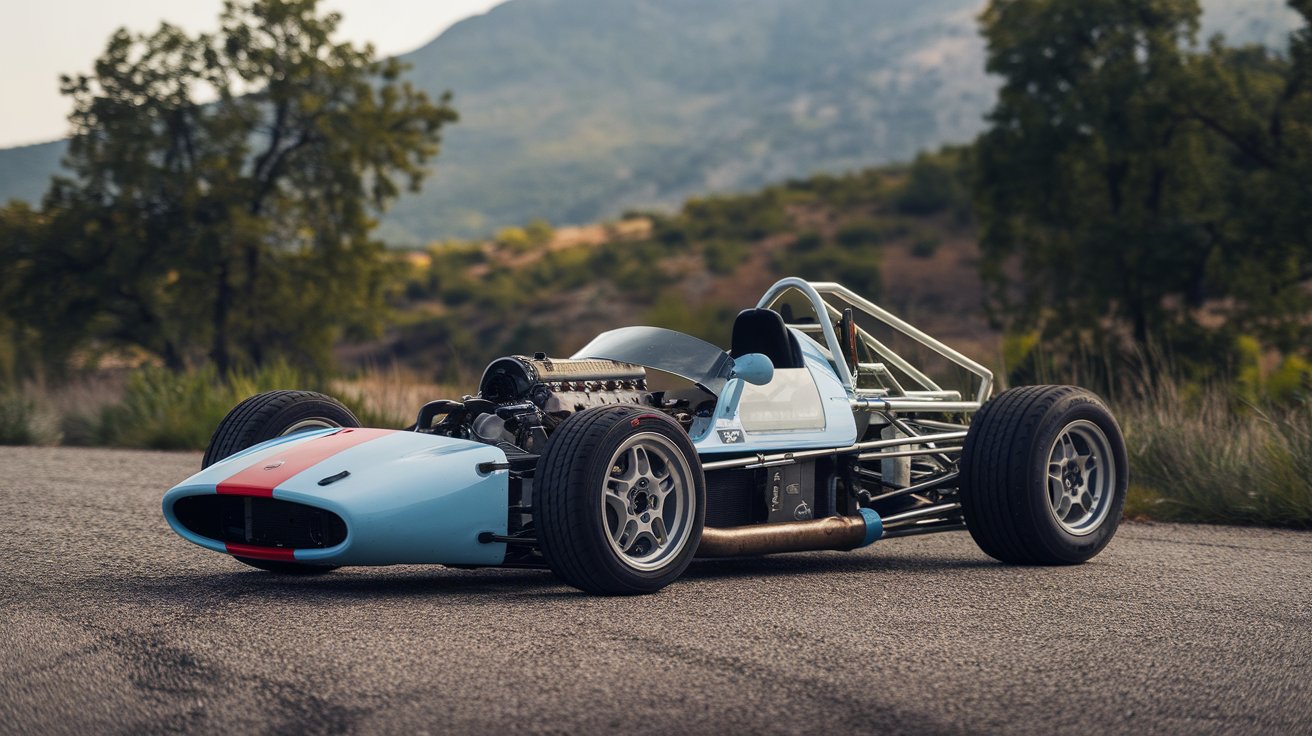
An open wheel race car represents the pinnacle of motorsport engineering, characterized by exposed wheels outside the main body for maximum aerodynamic efficiency and minimal weight. These purpose-built machines dominate professional racing circuits from Formula 1 to IndyCar, delivering unprecedented speed and handling. Whether you’re seeking an open wheel race car for sale, planning a driving experience, or understanding what makes these vehicles faster than closed-wheel alternatives, this comprehensive guide covers everything from suspension systems to purchasing options available in the United States in 2026.
What Are Open Wheel Race Cars Called and Why
Open wheel race cars are called formula cars, single-seaters, or simply open-wheelers across different racing series. The term originates from the distinctive design where wheels and suspension components remain exposed outside the vehicle’s main bodywork, unlike traditional sports cars or sedans. This configuration serves multiple engineering purposes that directly impact performance on racing circuits throughout the United States and globally.
The designation Formula 1 refers specifically to the highest class of international open wheel racing, where “formula” represents the set of technical regulations governing car construction. In the United States, IndyCar racing represents the premier domestic open wheel series, featuring cars that reach speeds exceeding 230 mph on oval tracks. Other categories include Formula 2, Formula 3, and various regional formula series that serve as developmental pathways for aspiring professional drivers in 2026.
The open wheel design provides significant aerodynamic advantages by reducing frontal area and allowing sophisticated airflow management around the exposed wheels. This configuration also minimizes weight compared to closed-body vehicles, with modern F1 cars weighing approximately 1,759 pounds without fuel in 2026. The exposed suspension geometry enables precise tuning for different track conditions, making these vehicles the fastest circuit racing machines available today.
Types of Open Wheel Race Cars Available in 2026
The open wheel racing landscape encompasses numerous vehicle categories, each designed for specific competition levels and driver skill requirements. Understanding these distinctions helps potential buyers and enthusiasts identify appropriate options for their goals, whether professional racing aspirations or recreational track experiences available across the United States.
Professional-Level Formula Cars
At the apex sit Formula 1 cars, representing approximately $15 million investments featuring hybrid powertrains producing over 1,000 horsepower combined from turbocharged V6 engines and energy recovery systems. These machines incorporate cutting-edge technology including active aerodynamics, carbon fiber monocoques, and sophisticated telemetry systems. However, actual F1 cars rarely become available for private purchase, with teams typically retaining chassis for historical purposes or museum displays.
IndyCar vehicles provide the primary professional open wheel racing platform in the United States, utilizing spec Dallara chassis paired with either Honda or Chevrolet engines producing approximately 700 horsepower. The 2026 IndyCar season features updated safety systems and hybrid components, with used chassis occasionally available to private buyers for $250,000 to $500,000 depending on condition and racing history. These cars represent genuine professional-grade equipment suitable for club racing and vintage events.
Entry-Level Formula and Club Racing Cars
Formula 4 cars serve as the primary entry point for aspiring professional drivers, featuring standardized chassis from manufacturers like Ligier and engines producing 160 horsepower. New F4 cars cost approximately $85,000 to $110,000 in 2026, while used examples become available for $45,000 to $70,000. These vehicles provide authentic open wheel racing experience with manageable operating costs of $15,000 to $25,000 per season for regional competition.
Formula Vee and Formula Ford represent affordable grassroots categories with robust followings at racetracks throughout the United States. Formula Vee cars utilize air-cooled Volkswagen engines producing 60 horsepower, with complete turnkey vehicles available from $15,000 to $35,000. Formula Ford features more powerful engines generating 120 to 150 horsepower, with competitive cars ranging from $25,000 to $55,000 depending on specification and preparation level.
Historic and Vintage Open Wheel Race Cars
Old open wheel race cars from the 1960s through 1990s generate significant collector interest, with prices varying dramatically based on racing provenance and manufacturer. A 1969 Brabham BT29 Formula B car with documented competition history commands $75,000 to $150,000 in current market conditions, while less distinguished examples sell for $35,000 to $60,000. These historic vehicles provide entry into prestigious vintage racing events including the Rolex Monterey Motorsports Reunion.
First-generation IndyCar chassis from the 1990s and early 2000s represent accessible vintage racing options, with Reynard, Lola, and G-Force chassis available from $40,000 to $95,000 depending on condition. Many vintage racing organizations throughout the United States welcome these cars at events, providing owners opportunities to experience open wheel racing without contemporary safety certification requirements or operational complexity.
Open Wheel Race Car Kits and Build Options
Several manufacturers produce open wheel race car kits enabling enthusiasts to construct their own vehicles with varying degrees of mechanical expertise. These kits range from complete turnkey solutions requiring minimal assembly to bare chassis demanding comprehensive fabrication skills and component sourcing.
The Palatov Motorsport D2 represents a popular kit option specifically designed for track day enthusiasts and club racers, featuring a tubular steel chassis with integrated roll protection. Complete kits start at $28,000 in 2026, with builders providing their own powertrain from options including motorcycle engines producing 150 to 200 horsepower. Build time typically requires 80 to 150 hours for mechanically competent individuals, resulting in a vehicle weighing approximately 950 pounds ready to race.
West Racing Cars WR1000 offers another proven kit platform with over 200 examples constructed worldwide since introduction. The chromoly tube frame design accepts various engine configurations, with most builders selecting Honda or Suzuki motorcycle powerplants. Complete kit pricing begins at $22,500, with builders investing an additional $15,000 to $25,000 for engine, transmission, wheels, and finishing components. These vehicles provide authentic open wheel dynamics at significantly lower costs than purchasing complete race cars.
For those seeking more sophisticated engineering, Stohr Cars manufactures sport racing chassis that comply with SCCA and NASA regulations. The WF1 model features carbon fiber bodywork, advanced suspension geometry, and professional-grade construction quality, with complete rolling chassis priced at $45,000 before powertrain installation. This platform enables competitive regional racing against purpose-built sports racers while maintaining open wheel design characteristics.
Where to Find Open Wheel Race Cars for Sale
Locating quality open wheel race cars for sale requires understanding specialized marketplaces and dealer networks serving the motorsports community throughout the United States. Unlike conventional vehicles, these racing machines rarely appear on mainstream automotive platforms, instead trading through dedicated channels.
Racecar Engineering and Racing Junk serve as primary online marketplaces featuring hundreds of active listings for formula cars across all categories. In February 2026, these platforms show approximately 180 open wheel vehicles available nationwide, ranging from $12,000 Formula Vee cars to $450,000 recent IndyCar chassis. These specialized sites enable filtering by class, price range, location, and preparation level, streamlining searches for specific vehicle types.
Established race car dealers including Fast Forward Racing, Pro Motorsports, and Race Car Prep maintain inventories of inspected, serviced vehicles with known histories. These professional dealers typically charge 10 to 15 percent premiums over private party sales but provide warranties, technical support, and detailed documentation. Many also offer consignment services for sellers, expanding available inventory beyond direct dealer purchases.
Regional racing organizations and club forums represent excellent resources for locating open wheel race cars from fellow competitors. The Sports Car Club of America regional websites maintain classified sections where members advertise race-ready vehicles, often including spare parts, transportation equipment, and technical support from sellers familiar with specific tracks and competition requirements. These community sales frequently offer superior value as sellers prioritize placing cars with knowledgeable buyers rather than maximizing profit.
Open Wheel Race Car Experiences and Driving Programs
For enthusiasts seeking to experience open wheel racing without vehicle ownership commitments, numerous professional driving programs operate throughout the United States in 2026. These experiences range from brief introductory sessions to comprehensive racing schools providing competition licenses and advanced instruction.
Professional Racing Schools
Skip Barber Racing School remains the premier open wheel training provider in North America, operating programs at multiple circuits including Laguna Seca, Road Atlanta, and Sebring International Raceway. Their three-day Formula Race Series costs $6,995 in 2026 and includes 12 hours of track time in purpose-built Formula cars, classroom instruction covering racing theory, and personalized coaching from professional instructors. Graduates receive SCCA competition licenses enabling entry into regional formula racing events.
Radial Racing School specializes in high-performance open wheel experiences using Radical SR3 cars, which combine formula car dynamics with enclosed cockpits. Weekend programs priced at $4,500 provide intensive track instruction at circuits throughout California, Texas, and Florida. These experiences emphasize proper racing lines, braking techniques, and car control skills transferable to various open wheel platforms.
Individual Driving Experiences
Single-day open wheel car experiences enable enthusiasts to drive genuine racing vehicles without multi-day commitments or licensing requirements. INDE Motorsports Ranch near Phoenix offers three-hour Formula 2000 driving sessions for $1,295, including professional instruction, all safety equipment, and approximately 40 minutes of actual track time. These programs accommodate drivers with minimal racing experience, providing graduated instruction that builds confidence throughout the session.
Exotics Racing locations in Las Vegas and Los Angeles feature Formula 4 cars among their fleet, with pricing starting at $399 for introductory experiences including five laps of coached driving. Extended programs offering 20 to 30 laps range from $1,200 to $1,800, providing substantial seat time for developing racing skills and experiencing authentic open wheel performance capabilities.
Understanding Open Wheel Race Car Suspension Systems
The open wheel race car suspension represents critical engineering that distinguishes these vehicles from conventional automobiles, enabling cornering forces exceeding 4.5 lateral G’s in professional applications. Modern formula car suspension systems employ sophisticated geometries and adjustable components that optimize tire contact patches throughout dynamic loading conditions encountered during high-speed cornering, braking, and acceleration.
Most contemporary open wheel cars utilize double wishbone independent suspension at all four corners, featuring unequal length upper and lower control arms that precisely control camber curves throughout suspension travel. This configuration allows engineers to independently tune bump and rebound characteristics, roll centers, and anti-dive geometry for specific circuit requirements. Adjustable components include spring rates, damper settings, anti-roll bar stiffness, and ride height, providing hundreds of potential setup combinations.
Push-rod and pull-rod actuated suspension designs characterize professional-level formula cars, routing suspension loads through rockers that compress horizontally-mounted coilover units. This arrangement lowers the suspension center of gravity compared to conventional vertically-mounted shocks while enabling aerodynamicists to optimize airflow around suspension components. F1 teams employ computational fluid dynamics to design suspension fairings that generate minimal drag while maintaining mechanical performance.
Tire management represents the primary suspension function in open wheel racing, with setups designed to maintain optimal operating temperatures between 180 and 220 degrees Fahrenheit depending on compound selection. Camber adjustments typically range from negative 2.0 to negative 4.5 degrees, while toe settings vary from 0 to 0.25 degrees depending on circuit characteristics. Professional teams utilize tire temperature data to validate suspension geometry, making incremental adjustments that improve lap times by tenths of seconds through enhanced mechanical grip.
Are Open Wheel Cars Faster Than Closed-Wheel Vehicles
The question of whether open wheel cars are faster depends entirely on specific vehicle comparisons, track configurations, and regulatory contexts. However, when comparing purpose-built racing machines operating under similar budgets and technical restrictions, open wheel designs consistently demonstrate superior lap times on road courses due to fundamental aerodynamic and weight advantages.
A current-generation IndyCar laps the 2.5-mile Indianapolis Motor Speedway road course in approximately 1:09.5, while the fastest sports cars competing in IMSA DPi competition require 1:11.2 for the same configuration. This 1.7-second advantage reflects the open wheel car’s 300-pound weight deficit and superior aerodynamic efficiency, generating comparable downforce from smaller frontal area. The exposed wheel design reduces drag while allowing more aggressive underbody aerodynamics that produce ground effect downforce.
Formula 1 cars represent the absolute pinnacle of circuit racing performance, with lap records at nearly every permanent road course worldwide. At Circuit of the Americas in Austin, Texas, the F1 lap record stands at 1:36.169 set in 2019, while the fastest sports car lap achieved by prototype racers requires approximately 1:51, representing a 14-second gap on the 3.4-mile circuit. This massive performance advantage stems from active aerodynamics, hybrid powertrains, and construction budgets exceeding $400 million annually for top teams.
However, closed-wheel cars demonstrate advantages in specific contexts including oval racing at speeds exceeding 235 mph, where enclosed bodywork provides superior high-speed stability. Endurance racing also favors sports car designs, as enclosed cockpits protect drivers during 24-hour events and bodywork allows easier repairs following contact. For pure lap time performance on road courses, equivalent-budget open wheel vehicles consistently outperform closed-wheel alternatives by 3 to 8 percent depending on circuit characteristics.
Operating Costs and Maintenance Requirements
Understanding the complete financial commitment of open wheel race car ownership extends beyond initial purchase prices to encompass ongoing maintenance, consumables, and operational expenses. These costs vary dramatically based on vehicle sophistication, competition frequency, and whether owners perform maintenance personally or engage professional preparation services.
Entry-level Formula Vee racing represents the most affordable open wheel competition, with typical season budgets ranging from $8,000 to $15,000 for regional club racing. This includes three to five tire sets at $800 each, engine refreshes every two seasons costing $2,500, brake components, fuel, and entry fees. Owners performing their own maintenance reduce costs substantially, while hiring professional shops increases annual expenditures to $18,000 to $25,000 for equivalent competition schedules.
Mid-level formula racing in Formula 4 or Formula Atlantic demands budgets from $45,000 to $85,000 annually for competitive regional campaigns. Engine rebuilds occur every 15 to 25 hours of operation at costs from $8,000 to $15,000 depending on specification. Tire expenses represent significant line items, with sets costing $1,200 to $2,000 and requiring replacement every race weekend under competitive conditions. Carbon fiber bodywork repairs following incidents range from $3,000 to $12,000 depending on damage severity.
Professional-level IndyCar operations require budgets exceeding $1.2 million per season for single-car teams, with engine leases alone costing $950,000 annually in 2026. Teams replace gearboxes every four races at $45,000 per unit, while tire allocations for the 17-race season cost approximately $180,000. These figures exclude personnel salaries, transportation logistics, or engineering support, illustrating why professional open wheel racing remains accessible only to well-funded teams and sponsored drivers.
Safety Equipment and Regulations for 2026
Modern open wheel racing incorporates extensive safety systems mandated by sanctioning organizations including the FIA, IndyCar, and SCCA. These requirements protect drivers during high-speed incidents while standardizing minimum equipment specifications across competition categories throughout the United States.
The Halo device represents the most significant safety advancement implemented across professional open wheel racing since 2018, with universal adoption in F1, IndyCar, Formula 2, and Formula 3 by 2026. This titanium structure surrounds the cockpit opening, capable of withstanding 12 metric tons of vertical loading to protect drivers from large debris or rollover incidents. While initially controversial for aesthetic reasons, the Halo has prevented serious injuries in multiple documented incidents, with driver acceptance now universal.
HANS devices (Head and Neck Support) remain mandatory across all levels of formula racing, securing drivers’ helmets to shoulder harnesses and limiting dangerous head movement during frontal impacts. These systems reduced basilar skull fractures by 95 percent following implementation in 2003, representing arguably the most effective safety advancement in motorsports history. Modern systems weigh approximately 1.2 pounds and cost $850 to $1,400 depending on manufacturer and construction materials.
Driver safety equipment requirements for 2026 include FIA 8856-2018 approved helmets costing $800 to $4,500, six-point harness systems replaced every two years at $450 to $850, and fire-resistant suits meeting FIA 8856-2000 standards priced from $600 to $2,200. Full equipment sets including HANS devices, gloves, shoes, and underwear represent $3,000 to $8,000 investments requiring periodic replacement as certifications expire. These specifications ensure consistent protection standards across sanctioning bodies and competition levels.
Best Open Wheel Cars for Track Day Enthusiasts
Several manufacturers produce road-legal or track-focused open wheel cars delivering authentic racing experiences without competition licensing requirements or racing series commitments. These vehicles bridge the gap between street cars and purpose-built race machines, providing exceptional performance for track day events held at circuits throughout the United States.
The BAC Mono represents the pinnacle of road-legal single-seaters, featuring a carbon fiber monocoque chassis and 2.5-liter Ford engine producing 332 horsepower. Weighing just 1,279 pounds, the Mono achieves 0-60 mph acceleration in 2.7 seconds and generates significant aerodynamic downforce from integrated bodywork. Pricing starts at $235,000 in 2026, positioning this British-built vehicle as the ultimate open wheel track day machine with street legal certification in most states.
Ariel Atom 4 provides more accessible performance with Honda-sourced 2.0-liter turbocharged engines producing 320 horsepower in a 1,433-pound chassis. The exposed frame design and open wheel configuration deliver authentic formula car aesthetics while maintaining street legality through DOT-approved lighting and emissions compliance. Pricing begins at $79,000, representing excellent value for enthusiasts seeking genuine open wheel dynamics with minimal operational complexity compared to race cars.
The Caterham Seven 620R adapts the classic Lotus Seven formula with modern engineering, featuring a supercharged 2.0-liter engine producing 310 horsepower. While technically not a true open wheeler due to cycle fenders covering the wheels, the exposed suspension and minimal bodywork provide similar driving experiences. Base pricing of $84,000 includes comprehensive weather protection equipment and refined ergonomics suitable for street driving and extended track sessions.
The Future of Open Wheel Racing in America
Open wheel racing faces both challenges and opportunities in the United States market as 2026 progresses, with sanctioning bodies implementing strategic initiatives to expand audiences, reduce costs, and incorporate sustainable technologies while preserving the fundamental performance characteristics that define these vehicles.
The IndyCar Series introduced hybrid powertrains for the 2024 season, combining traditional internal combustion engines with electric motors and energy storage systems producing an additional 60 horsepower during push-to-pass activations. This technology reduces fuel consumption by approximately 20 percent while maintaining performance parity with previous specifications. Next-generation chassis development continues for 2027 introduction, featuring enhanced crash structures, active aerodynamic elements, and sustainable composite materials reducing environmental impact.
Formula 1 commitment to carbon neutrality by 2030 drives development of 100 percent sustainable fuels compatible with current engine architectures, with several teams testing advanced biofuels during 2026 competition. The sport’s growing American presence includes three United States races in Miami, Austin, and Las Vegas, with potential expansion to additional markets under discussion. Increased television viewership and social media engagement demonstrate effective marketing strategies attracting younger demographics to open wheel racing.
Grassroots formula racing organizations are implementing cost control measures to preserve accessibility for privateer competitors and aspiring professional drivers. The Formula 4 United States Championship mandates spec chassis and sealed engines limiting annual budgets to competitive levels, while regional Formula Vee and Formula Ford series maintain traditional low-cost competition models. These developmental pathways ensure continued driver progression from entry-level categories through professional ranks, sustaining long-term health of open wheel motorsports throughout North America.
Related video about open wheel race car
This video complements the article information with a practical visual demonstration.
Essential Q&A about open wheel race car
What are open wheel race cars called?
Open wheel race cars are called formula cars, single-seaters, or open-wheelers depending on regional terminology and specific racing series. The term “formula” derives from the technical regulations governing construction specifications for each racing class. In the United States, these vehicles compete primarily in IndyCar, Formula 4, Formula Atlantic, and various club racing categories including Formula Vee and Formula Ford. Professional international series include Formula 1, Formula 2, and Formula 3, each with distinct technical formulas defining engine specifications, chassis dimensions, and aerodynamic parameters for that particular competition level.
Why is F1 called open wheel?
Formula 1 is called open wheel because the car’s wheels and suspension components remain fully exposed outside the main bodywork, unlike closed-wheel sports cars or touring cars where fenders cover the wheels. This design originated in early racing when removing fenders reduced weight and improved cooling. The exposed configuration provides significant aerodynamic advantages by minimizing frontal area and enabling sophisticated airflow management around the wheels. Modern F1 regulations specifically mandate open wheel designs, with detailed technical specifications governing wheel fairings and suspension visibility. The exposed wheels have become the defining visual characteristic of formula racing across all levels from grassroots club racing through professional international competition.
Is IndyCar open wheel racing?
Yes, IndyCar is open wheel racing and represents the premier open wheel racing series in the United States. IndyCar vehicles feature exposed wheels and suspension components consistent with formula car design principles, utilizing spec Dallara chassis with either Honda or Chevrolet engines producing approximately 700 horsepower in 2026. The series competes on diverse circuits including oval superspeedways, permanent road courses, and temporary street circuits throughout North America. IndyCar serves as the top tier of American open wheel racing, featuring the Indianapolis 500 as its marquee event. The championship provides opportunities for drivers progressing from junior formula categories while attracting international talent from Formula 2, Formula 3, and other global series.
Are open wheel cars faster than closed-wheel cars?
Open wheel cars are faster than equivalent-budget closed-wheel vehicles on most road course configurations due to superior power-to-weight ratios and aerodynamic efficiency. A contemporary IndyCar laps typical circuits 3 to 5 percent quicker than top-level sports car prototypes competing under similar technical restrictions. The exposed wheel design reduces drag while enabling more aggressive underbody aerodynamics that generate ground effect downforce. Formula 1 cars represent the absolute fastest circuit racing vehicles, consistently setting lap records at permanent road courses worldwide with performance advantages of 8 to 12 percent over prototype sports cars. However, closed-wheel designs demonstrate superiority in specific applications including ultra-high-speed oval racing exceeding 235 mph where enclosed bodywork provides enhanced stability.
How much does an open wheel race car cost?
Open wheel race car prices range from $15,000 for entry-level Formula Vee vehicles to over $15 million for current Formula 1 chassis in 2026. Popular categories include Formula 4 cars priced from $45,000 to $110,000 new, used IndyCar chassis selling for $250,000 to $500,000, and accessible kit cars like the Palatov D2 starting at $28,000 before powertrain installation. Regional club racing options including Formula Ford and Formula Atlantic provide competitive race-ready vehicles from $25,000 to $75,000 depending on preparation level and recent updates. Operating costs represent significant ongoing expenses, with annual budgets ranging from $8,000 for grassroots Formula Vee competition to over $1.2 million for professional IndyCar campaigns.
Where can I experience driving an open wheel race car?
Open wheel race car experiences are available through professional driving schools and specialty track day operators throughout the United States in 2026. Skip Barber Racing School offers comprehensive three-day programs at $6,995 including 12 hours of track time in purpose-built Formula cars at multiple circuits including Laguna Seca and Sebring. Single-day experiences start at $399 through providers like Exotics Racing in Las Vegas and Los Angeles, offering coached laps in Formula 4 cars. INDE Motorsports Ranch near Phoenix provides three-hour Formula 2000 sessions for $1,295 with approximately 40 minutes of actual driving time. These programs accommodate various skill levels from complete beginners through experienced track day enthusiasts seeking authentic racing instruction.
| Category | Key Details | Primary Benefit |
|---|---|---|
| Entry-Level Racing | Formula Vee and Formula Ford from $15,000-$55,000 | Affordable competition with $8,000-$15,000 annual budgets |
| Intermediate Categories | Formula 4 and Formula Atlantic $45,000-$110,000 | Professional development pathway with SCCA licensing |
| Professional Racing | IndyCar chassis $250,000-$500,000 used | Genuine professional equipment for club racing |
| Kit Car Options | Palatov D2 and West WR1000 from $22,500-$28,000 | Custom builds with 80-150 hour construction time |
| Track Day Vehicles | Ariel Atom 4 and BAC Mono $79,000-$235,000 | Road-legal performance with authentic dynamics |
| Driving Experiences | Single sessions $399-$1,295, schools $4,500-$6,995 | No ownership required, professional instruction included |