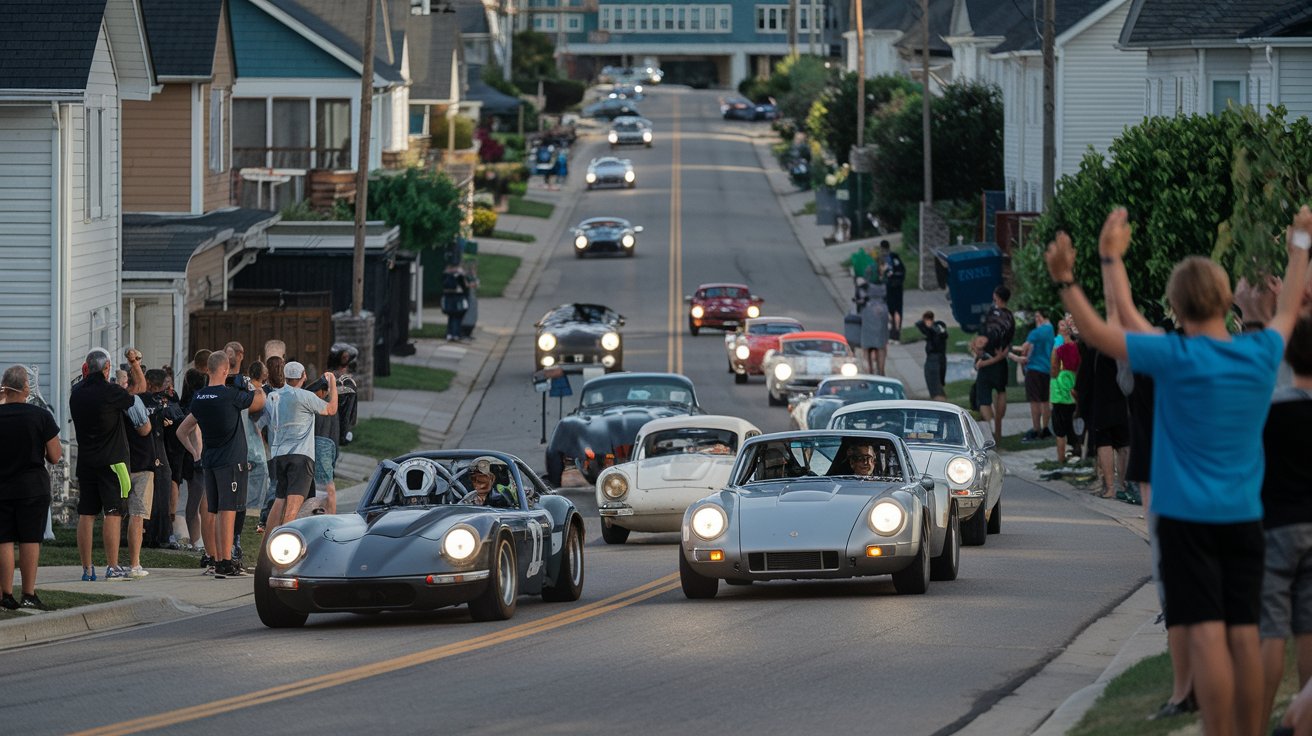
The question is drag racing illegal depends entirely on where and how you race. In the United States, street drag racing is illegal in all 50 states, with severe penalties including fines, license suspension, and even jail time. However, legal drag racing exists at sanctioned tracks and facilities nationwide. Understanding the difference between illegal street racing and legitimate drag racing can save you from criminal charges while still enjoying the thrill of high-speed competition.
Understanding Drag Racing and Its Legal Status in the United States
Drag racing is a form of motor racing where two vehicles compete side-by-side over a straight, measured distance, typically a quarter-mile or eighth-mile. The sport originated in Southern California during the 1930s and has evolved into both a legitimate motorsport and an illegal street activity. As of 2026, the distinction between legal and illegal drag racing centers on location, sanctioning, and safety measures rather than the activity itself.
The National Hot Rod Association (NHRA) has sanctioned legal drag racing since 1951, establishing safety standards and competitive frameworks. However, when drag racing occurs on public roads without permits or safety infrastructure, it becomes illegal street racing. According to 2026 Department of Transportation statistics, illegal street racing contributes to approximately 1,200 fatalities annually in the United States, prompting strict enforcement across all jurisdictions.
Federal and State Laws Regarding Street Drag Racing
While no single federal law explicitly bans drag racing, federal regulations address street racing through traffic safety provisions and interstate commerce laws. The STREET Act (Preventing Automobile Racing on Streets), introduced in various sessions of Congress, allows federal prosecutors to charge street racers who use vehicles or parts transported across state lines. Individual states maintain primary jurisdiction over street racing laws, with penalties varying significantly across jurisdictions.
As of 2026, all 50 states classify illegal street racing as a misdemeanor or felony depending on circumstances. States like California, Florida, Texas, and Virginia have enacted some of the strictest legislation, treating street racing as an automatic license suspension offense. Enhanced penalties apply when racing results in injury, death, or property damage, with some jurisdictions imposing mandatory minimum sentences for repeat offenders.
California’s Strict Street Racing Legislation
California Vehicle Code Section 23109 makes street racing illegal with penalties including 24 to 90 days in jail, fines up to $1,000, and mandatory vehicle impoundment for 30 days. For spectators or those preparing to race, California imposes similar penalties under the aiding and abetting statute. As of 2026, California courts processed over 18,000 illegal drag racing cases annually, with conviction rates exceeding 82%. The state also employs automated license plate readers specifically targeting known street racing locations in Los Angeles, San Diego, and the San Francisco Bay Area.
Florida’s Enhanced Penalties for Street Racing
Florida Statute 316.191 defines illegal street racing as a first-degree misdemeanor carrying up to one year in jail and $1,000 in fines. If bodily injury occurs, charges escalate to a third-degree felony with penalties up to five years imprisonment. Florida implemented a 2025 law allowing permanent vehicle seizure for third-time offenders, and 2026 data shows a 34% decrease in street racing incidents in Miami-Dade County following enhanced enforcement. Florida courts also mandate community service at trauma centers for convicted street racers to witness racing accident consequences firsthand.
Criminal Penalties for Illegal Drag Racing
Penalties for illegal drag racing in 2026 range from traffic infractions to serious felonies depending on jurisdiction and circumstances. First-time offenders typically face misdemeanor charges with fines between $500 and $2,500, potential jail time from 24 hours to six months, and license suspension ranging from 30 days to one year. Many states also impose mandatory community service hours, completion of driver education programs, and probation periods extending up to three years.
Repeat offenders face significantly harsher consequences. Second convictions often result in mandatory jail sentences of 90 days to one year, fines exceeding $5,000, and license revocation for up to five years. Third offenses in states like Virginia, Georgia, and Arizona carry felony classifications with prison sentences ranging from one to five years. Additionally, convicted street racers face civil liability for property damage, medical expenses, and wrongful death claims that can result in lifetime financial obligations totaling millions of dollars.
Vehicle Impoundment and Forfeiture Laws
Beyond personal penalties, vehicle impoundment has become a primary enforcement tool against illegal drag racing in 2026. Most states authorize immediate 30-day impoundment upon arrest, with owners responsible for towing fees ($200-$500) and daily storage costs ($50-$100). States including California, Florida, Illinois, and Washington now permit permanent vehicle forfeiture for repeat offenders or when racing results in serious injury. According to 2026 law enforcement data, approximately 14,000 vehicles were permanently seized nationwide for street racing violations, with auction proceeds funding traffic safety programs.
Insurance Consequences and Financial Impact
A street racing conviction triggers severe insurance consequences that extend for years. Insurance companies classify street racing as reckless behavior, resulting in immediate policy cancellation or premium increases of 200-400%. Many convicted racers must obtain high-risk SR-22 insurance, which costs 3-5 times standard rates and remains required for three to five years depending on state mandates. The total financial impact of a single illegal drag racing conviction averages between $15,000 and $25,000 when accounting for fines, legal fees, impoundment costs, increased insurance premiums, and lost income from license suspension.
Legal Alternatives: Sanctioned Drag Racing Venues and Events
Enthusiasts seeking the thrill of drag racing can participate legally at sanctioned facilities across the United States. As of 2026, over 280 NHRA-member tracks operate nationwide, offering everything from casual test-and-tune nights to professional competition series. These facilities provide safe, controlled environments with proper safety equipment, medical personnel, fire suppression systems, and technical inspections. Most tracks offer legal drag racing opportunities for as little as $20-$50 per entry, making it an affordable alternative to illegal street racing.
Major sanctioned drag racing organizations include the NHRA, International Hot Rod Association (IHRA), and numerous regional racing associations. These organizations maintain strict safety standards including mandatory helmets, fire suits for faster vehicles, roll cages, and vehicle inspections. Tracks categorize participants by vehicle type and skill level, ensuring fair competition. Beyond traditional quarter-mile facilities, 2026 has seen growth in eighth-mile tracks, autocross events, and road course time trials, providing diverse legal racing options for different vehicle types and driving preferences.
NHRA Member Tracks and Participation Requirements
The NHRA operates or sanctions 280+ drag racing facilities in 2026, from small local tracks to premier venues like Auto Club Raceway in Pomona and zMAX Dragway in Charlotte. Entry requirements vary by event type but typically include a valid driver’s license, vehicle safety inspection, proper safety equipment based on vehicle performance class, and event entry fees. Test-and-tune sessions allow beginners to experience legal drag racing in their personal vehicles with minimal modifications. For serious competitors, NHRA membership costs $50-$75 annually and provides insurance coverage, rule books, and access to over 5,000 sanctioned events nationwide.
Community Programs and Street Racing Intervention Initiatives
Many municipalities have established legal street racing alternatives through community programs that redirect enthusiasm toward sanctioned venues. Programs like Los Angeles’s Street Racing Task Force partners with tracks to offer free or discounted racing nights specifically for former street racers. Similar initiatives in Houston, Phoenix, and Atlanta have reduced illegal street racing incidents by 25-40% since implementation. These programs often include mentorship from professional racers, mechanical training, and pathways to legitimate motorsports careers, addressing the social aspects that draw young people to illegal racing culture.
Is Drag Racing Dangerous? Safety Considerations and Statistics
The question is drag racing dangerous has different answers for sanctioned versus illegal racing. Legal drag racing at NHRA-sanctioned facilities maintains an excellent safety record, with serious injuries occurring in less than 0.001% of runs according to 2026 statistics. This safety stems from comprehensive regulations including vehicle inspections, mandatory safety equipment, trained safety crews, and controlled environments. Professional drag racing has evolved sophisticated safety technology including HANS devices, advanced fire suppression systems, and aerodynamic parachutes for high-speed deceleration.
Conversely, illegal street drag racing proves exceptionally dangerous with fatality rates 47 times higher than sanctioned events per 2026 National Highway Traffic Safety Administration data. Street racing occurs on uncontrolled roads with pedestrian traffic, cross-streets, fixed objects, and no safety infrastructure. Vehicles often lack proper safety equipment, drivers receive no safety briefings, and no medical personnel stand ready for emergencies. Street racing fatalities frequently involve innocent bystanders, with 2026 data showing 38% of street racing deaths involved non-participants including pedestrians, passengers in other vehicles, and residential occupants.
What Is Street Racing and How Does It Differ from Legal Drag Racing
Street racing refers to any unauthorized motor vehicle race conducted on public roads, highways, or parking areas without proper permits, safety measures, or legal sanction. Unlike legal drag racing at designated facilities, street racing lacks controlled conditions, safety equipment, emergency services, or spectator protection. Street racing culture often involves spontaneous challenges, illegal modifications that violate emissions and safety standards, and gatherings that obstruct public roadways.
The fundamental difference between street racing and legal drag racing lies in environmental control and safety infrastructure. Legal tracks feature prepared racing surfaces with optimal traction, defined boundaries, runoff areas for control loss, and fire suppression systems. Sanctioned events require technical vehicle inspections, appropriate safety gear based on vehicle speed potential, and licensed competition credentials for faster classes. Street racing occurs wherever participants choose, often on roads with turns, intersections, pedestrian access, and unpredictable surface conditions that dramatically increase accident risk.
Street Racing Culture and Social Media Influence
Modern street racing culture has evolved significantly with social media platforms facilitating larger gatherings and wider promotion of illegal events. In 2026, law enforcement reports that Instagram, TikTok, and encrypted messaging apps coordinate street racing takeovers involving hundreds of participants and thousands of spectators. These events often include dangerous stunts like donuts, drifting on public roads, and street closures created by participants blocking intersections. Social media documentation of illegal street racing provides prosecutors with substantial evidence, resulting in conviction rates exceeding 90% when video evidence exists showing license plates or driver identification.
Law Enforcement Detection and Prevention Methods
Police departments across the United States employ sophisticated methods to combat illegal drag racing in 2026. Technologies include license plate readers at known racing locations, social media monitoring to identify planned events, unmarked surveillance aircraft with infrared cameras, and undercover operations infiltrating racing communities. Many jurisdictions establish dedicated street racing task forces combining traffic enforcement, detectives, and prosecutors. Prevention efforts include public education campaigns, billboard warnings at racing hotspots, and collaboration with automotive communities to promote legal racing alternatives. Cities like Los Angeles and Houston invested over $8 million combined in 2026 for street racing enforcement technology and dedicated personnel.
Can Minors Participate in Drag Racing Legally
The question can a 17 year old drag race has a clear answer: yes, but only at sanctioned facilities with proper parental consent and licensing. Most NHRA-member tracks permit drivers as young as 16 to participate in specific classes with parental waivers and completion of approved driver education programs. Junior drag racing programs exist for children as young as 8 years old, using specially designed junior dragsters with speed-limited engines and extensive safety equipment.
For teenage participants, requirements typically include a valid driver’s license or learner’s permit, parental consent forms, completion of track-specific safety orientations, and appropriate safety equipment based on vehicle performance. Vehicles must pass technical inspection, and younger drivers face restrictions on vehicle types and speed classes. The NHRA Junior Drag Racing League provides structured competition for ages 8-17 across multiple divisions, teaching racing skills, mechanical knowledge, and sportsmanship in controlled environments. However, minors caught street racing illegally face juvenile court proceedings, license suspension before full licensing eligibility, and permanent criminal records that impact college admissions and future employment.
Notable Illegal Street Racing Cases and Their Outcomes
High-profile illegal street racing cases demonstrate the severe consequences participants face when racing results in tragedy. In 2024, a Los Angeles street racing incident killed a family of four, resulting in second-degree murder convictions and 30-to-life sentences for both racers. Similar cases in Houston, Atlanta, and Tampa produced vehicular homicide convictions with sentences ranging from 15 to 40 years imprisonment, illustrating that street racing fatalities often result in homicide charges rather than simple traffic violations.
Beyond individual prosecutions, some jurisdictions pursue criminal enterprise charges against organized street racing groups. A 2025 federal prosecution in South Florida charged 27 individuals under RICO statutes for operating an illegal racing organization, resulting in convictions with sentences up to 12 years federal prison. These cases establish legal precedent that organized street racing constitutes criminal conspiracy, subjecting participants to enhanced penalties beyond individual racing charges. Civil lawsuits following street racing fatalities have produced judgments exceeding $10 million, with courts piercing corporate veils to reach assets of parts suppliers and vehicle modification shops that knowingly equipped illegal racing vehicles.
International Perspectives: Street Racing Laws in Other Countries
While this article focuses on United States regulations, understanding street racing laws internationally provides valuable context. The question is street racing legal in Canada has a similar answer to the US: street racing is illegal throughout Canada under Criminal Code Section 249.4, with penalties including up to 10 years imprisonment when causing bodily harm. Canadian provinces also impose administrative penalties including immediate license suspension and vehicle impoundment.
Australia maintains some of the world’s strictest anti-street racing laws, with states like New South Wales imposing automatic 12-month license suspensions and vehicle impoundment for first offenses. European countries vary significantly, with Germany’s autobahn system allowing high-speed driving in designated areas, while countries like the United Kingdom treat street racing as dangerous driving with penalties up to 14 years imprisonment. Japan, despite its street racing culture depicted in media, enforces strict penalties including immediate license revocation and criminal prosecution. These international approaches demonstrate global consensus that street racing poses unacceptable public safety risks requiring criminal sanction.
The History and Evolution of Drag Racing Regulation
Drag racing history traces to post-World War II America when returning servicemen with mechanical skills and surplus vehicles began informal racing. Initially occurring on dry lake beds and abandoned airstrips, racing gradually moved to public streets as urban areas expanded. The establishment of the NHRA in 1951 marked the first organized effort to provide legal racing alternatives and establish safety standards, directly responding to increasing street racing fatalities.
Legislative responses to illegal street racing evolved throughout decades as the problem persisted. Early laws in the 1950s and 1960s treated street racing as simple traffic violations with minimal fines. The 1970s and 1980s saw increased penalties as racing-related fatalities climbed. Modern legislation beginning in the 1990s introduced vehicle impoundment, license suspension, and felony classifications for serious cases. The 2000s brought spectator liability laws recognizing that audiences encourage racing, while 2010s legislation targeted social media promotion of illegal events. Current 2026 regulations represent the culmination of 75 years of regulatory evolution, balancing punishment with prevention through legal racing access and community intervention programs.
Related video about is drag racing illegal
This video complements the article information with a practical visual demonstration.
Key Questions and Answers
Is drag racing illegal on private property in the United States?
Drag racing on private property is generally legal if the property owner grants permission and the activity complies with local noise ordinances, zoning regulations, and safety codes. However, many municipalities require special event permits even for private property racing, and spectator access may trigger additional regulations. If the private property connects to public roads without adequate barriers, participants could still face charges for reckless driving or exhibition of speed. Insurance liability becomes a significant concern, as standard property insurance typically excludes motorsports activities, potentially exposing property owners to substantial civil liability if accidents occur.
What happens if you’re caught watching illegal street racing?
Spectators at illegal street racing events face criminal charges in most states under aiding and abetting statutes or specific spectator liability laws. As of 2026, at least 35 states allow prosecution of spectators with penalties including fines up to $1,000, jail time up to six months, and community service requirements. California, Florida, and Virginia lead enforcement against spectators, with some jurisdictions impounding spectator vehicles parked near racing events. Legal theory holds that spectator presence encourages racing, making them accomplices to the illegal activity. Recorded video evidence on personal devices often provides prosecutors with proof of presence and participation in illegal gatherings.
How much does legal drag racing at a sanctioned track cost?
Legal drag racing costs vary by facility and event type, but entry-level participation remains surprisingly affordable in 2026. Test-and-tune sessions at most NHRA-member tracks cost $20-$50 for unlimited runs during the event, typically lasting 4-6 hours. Bracket racing entry fees range from $30-$75 with potential prize money for winners. Professional class participation requires NHRA membership ($50-$75 annually) plus event entry fees from $100-$500 depending on class and event prestige. Safety equipment represents the largest initial investment, with helmets costing $200-$800, racing suits $300-$1,200, and advanced safety systems for faster vehicles reaching $5,000-$15,000. However, many tracks rent basic safety equipment, allowing newcomers to experience legal racing before investing in personal gear.
Can police confiscate your car permanently for street racing?
Yes, permanent vehicle confiscation is legally authorized in many states for street racing violations as of 2026. California, Florida, Georgia, Illinois, Oregon, Virginia, and Washington all permit permanent forfeiture for repeat offenses or when racing causes injury. The process involves civil asset forfeiture proceedings separate from criminal prosecution, where the state claims ownership of the vehicle as an instrumentality of crime. Vehicle owners can contest forfeiture through administrative hearings, but success rates remain low when clear evidence of street racing exists. Forfeited vehicles are typically auctioned, with proceeds funding law enforcement and traffic safety programs. Even first-time offenders face mandatory temporary impoundment of 30 days in most jurisdictions, with owners responsible for all towing and storage fees averaging $2,000-$4,000.
Is street racing still a thing in 2026 despite strict enforcement?
Street racing continues to occur throughout the United States in 2026 despite enhanced enforcement and increased penalties. However, the nature and frequency have evolved significantly. Traditional impromptu highway racing has declined approximately 40% since 2015 according to Department of Transportation data, while organized takeover events coordinated through social media have increased. Law enforcement reports that street racing has become more mobile, with participants using encrypted communications and rapidly changing locations to evade police. The proliferation of high-performance electric vehicles has also changed street racing dynamics, with quieter operation making detection more difficult. Despite ongoing activity, fatal street racing incidents decreased 18% from 2023 to 2026, suggesting that enforcement efforts combined with legal racing alternatives have reduced the most dangerous behaviors even as the culture persists.
What is the longest illegal car race ever documented?
The longest illegal car race documented was the 1970s Cannonball Baker Sea-to-Shining-Sea Memorial Trophy Dash, an unsanctioned cross-country race from New York to Los Angeles covering approximately 2,800 miles. Organized by Car and Driver magazine editor Brock Yates, the event ran from 1971-1979 and inspired similar illegal races. The fastest recorded time was 32 hours and 51 minutes set in 1979. While romanticized in popular culture, these events violated numerous traffic laws across multiple states and endangered public safety. Modern attempts at cross-country speed records face federal prosecution under interstate transportation laws, and participants risk felony charges in every jurisdiction traversed. The legacy of these races lives on through legal events like the Tire Rack One Lap of America, which follows speed limits on public roads between sanctioned track sessions.
| Legal Aspect | Illegal Street Racing | Legal Sanctioned Racing |
|---|---|---|
| Legality Status | Criminal offense in all 50 states | Fully legal with proper permits |
| Typical Penalties | $500-$5,000 fines, jail time, license suspension | None – legitimate motorsport activity |
| Safety Infrastructure | None – public roads with hazards | Professional safety crews, barriers, medical staff |
| Vehicle Requirements | Often illegally modified | Inspected for safety compliance |
| Entry Cost | $15,000-$25,000 if caught (fines, legal, insurance) | $20-$50 per event at most tracks |
| Injury Rate | 47x higher than sanctioned racing | Less than 0.001% serious injury rate |
| Insurance Impact | Policy cancellation, 200-400% rate increases | No negative impact on auto insurance |
| Criminal Record | Permanent misdemeanor or felony record | No criminal implications |