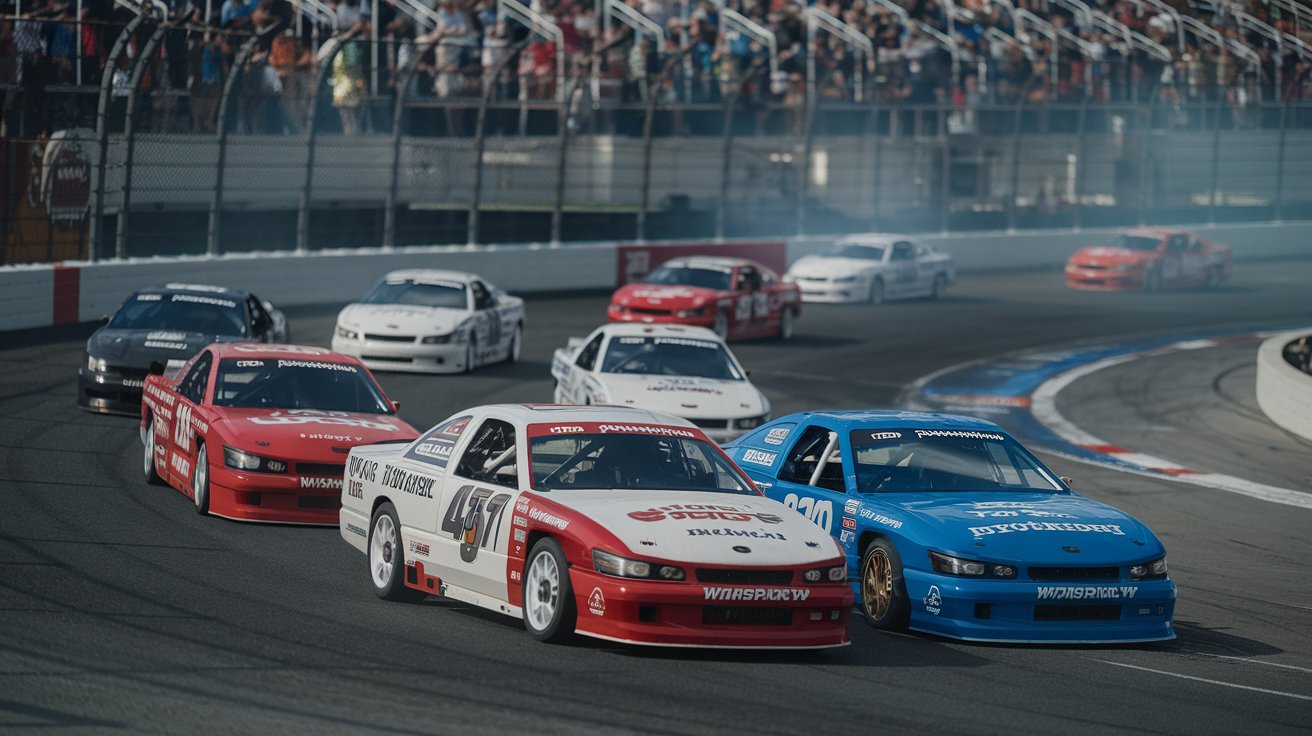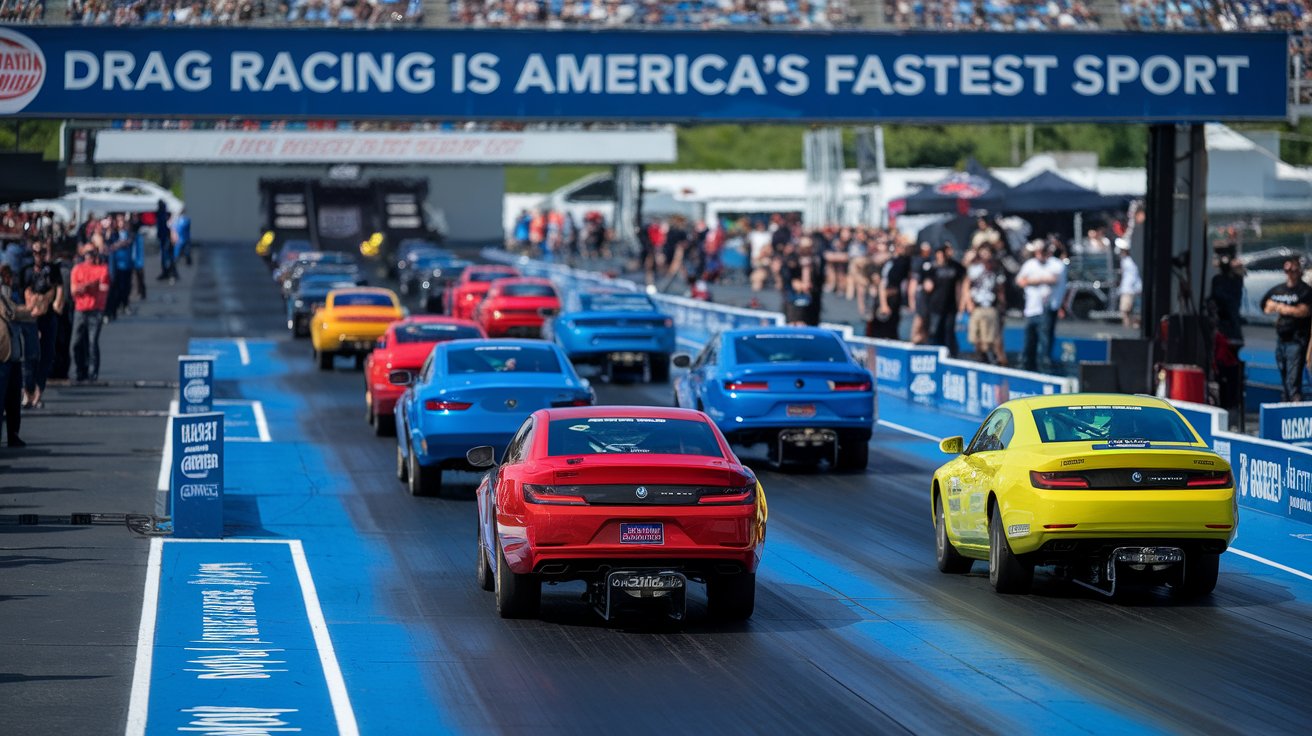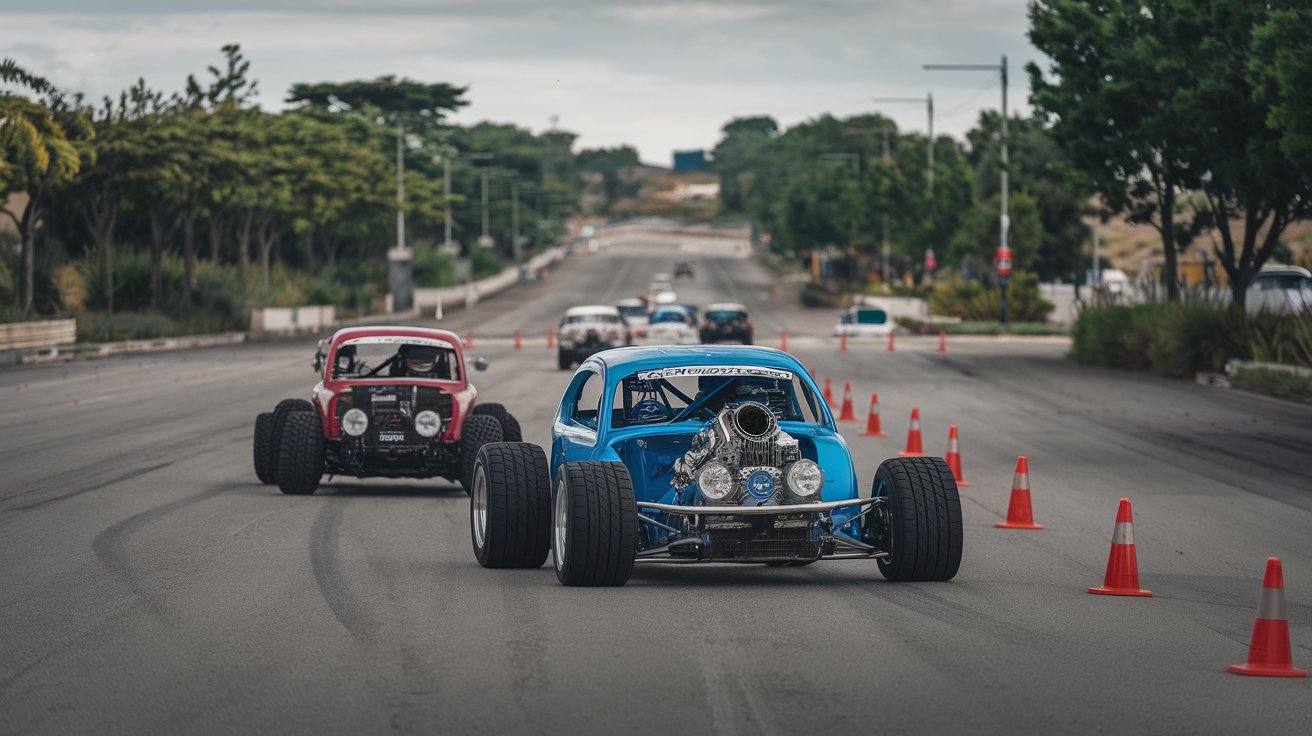
No prep drag racing has revolutionized American motorsports by bringing authentic street racing conditions to sanctioned tracks across the United States. Unlike traditional drag racing where tracks are treated with chemicals for maximum grip, no prep racing features untreated surfaces that challenge drivers with unpredictable traction. This raw, skill-based competition has exploded in popularity since 2015, with events drawing over 25,000 spectators and streaming audiences exceeding 500,000 viewers per event in 2026.
What Is No Prep Drag Race
A no prep drag race occurs on racing surfaces that receive minimal or zero chemical preparation before competition begins. Traditional drag strips use specialized compounds like VHT TrackBite or PJ1 TrackBite to enhance tire grip, but no prep events deliberately avoid these treatments. The result creates racing conditions similar to illegal street racing, where drivers must adapt to changing track temperatures, moisture levels, and surface inconsistencies throughout competition.
The no prep racing format emerged from underground street racing culture in the early 2010s, gaining mainstream recognition through Discovery Channel’s Street Outlaws franchise. By 2026, over 150 sanctioned no prep events occur annually across the United States, with prize pools ranging from $10,000 to $100,000. These competitions test driver skill, vehicle setup, and mechanical knowledge far beyond traditional prep drag racing where consistent track conditions minimize variables.
Vehicles competing in no prep races typically generate between 2,500 and 4,000 horsepower, with some unlimited class cars exceeding 5,000 horsepower. Common platforms include 1968-1972 Chevrolet Novas, Fox Body Mustangs, and late-model Camaros, though virtually any chassis can compete. The unpredictable surface conditions mean even the most powerful car can lose traction instantly, making driver reaction time and throttle control more critical than raw power.
No Prep Kings Racing Series Status
The No Prep Kings series continues strong operations in 2026 as Discovery Channel’s flagship street racing competition, despite rumors of cancellation that circulated in 2022-2023. The series expanded to 16 events for the 2026 season, visiting tracks in Texas, Oklahoma, Virginia, Illinois, and seven other states. Street Outlaws No Prep Kings maintains its position as American television’s highest-rated drag racing program, averaging 1.2 million viewers per episode and generating over 8 million streaming views monthly across Discovery+ and YouTube platforms.
Production company Pilgrim Media Group renewed contracts through 2028, confirming No Prep Kings did not cancel operations despite cast changes and venue modifications. The 2026 season features a $500,000 total prize purse, with the championship winner receiving $100,000 plus contingency bonuses from sponsors including VP Racing Fuels, Mickey Thompson Tires, and Precision Turbo & Engine. Eight new racers joined the roster while veterans like Ryan Martin, Kye Kelley, and Lizzy Musi continue competing at the highest level.
Rules for No Prep Racing
Understanding what are the rules for no prep racing requires recognizing that regulations vary between sanctioning bodies, though core principles remain consistent. The International No Prep Association (INPA), formed in 2024, established standardized guidelines adopted by approximately 60% of American tracks by 2026. Primary no prep racing rules prohibit chemical track preparation within 24 hours of competition, limit wheelbase modifications to 2 inches from factory specifications for street-legal classes, and require functional headlights and taillights for all vehicles.
Vehicle Classification and Technical Rules
Most no prep racing events organize competitors into four primary classifications: Small Tire, Big Tire, Pro Modified, and Unlimited. Small Tire classes restrict rear tires to 315mm width maximum and typically limit power adders to single turbochargers under 88mm or naturally aspirated combinations. Big Tire classes permit up to 16-inch wide slicks and unlimited forced induction, with vehicles commonly running twin 88mm turbochargers or ProCharger F3 superchargers producing 3,500+ horsepower.
Safety regulations mandate SFI 25.5 certified roll cages for all vehicles running quicker than 10.99 seconds in the quarter mile, while cars exceeding 200 mph require SFI 16.1 rated parachutes and five-point harness systems. No prep drag racing rules for 2026 include updated fire suppression requirements, with onboard systems containing minimum 5-pound capacity and cockpit activation within driver reach. Technical inspection occurs before qualifying rounds, checking for fuel system safety, proper ballast mounting, and wheel/tire security.
Race Format and Qualifying Procedures
The standard no prep race format begins with test and tune sessions where drivers assess track conditions without official timing. Qualifying follows, typically consisting of two passes where participants establish elimination bracket seeding. Unlike traditional drag racing’s Christmas Tree starting system with amber countdown lights, many no prep events use flashlight starts where a track official drops a flashlight beam to signal launch, mimicking street racing origins.
Elimination rounds proceed in bracket-style format with faster qualifiers receiving lane choice advantage. No prep racing rules generally prohibit changing lanes after staging and require both vehicles to pre-stage before either can fully stage. The 2026 season introduced controversial transgender restrictions and weight class adjustments, though driver protests led to modified implementation across different sanctioning bodies. Reaction time advantages often determine winners more than vehicle performance, with top competitors consistently achieving .000 to .020 second light times.
No Prep Racing vs Traditional Prep Drag Racing
The fundamental difference between prep drag racing and no prep competitions lies in track surface treatment and resulting consistency. Traditional drag racing prep involves multiple steps including track sweeping, chemical spraying with VHT or similar compounds, burnout box preparation, and continuous maintenance between rounds. This process creates near-identical launches for competitors, where properly tuned vehicles can repeat elapsed times within 0.02 seconds across multiple passes.
In contrast, what is prep drag racing avoids becomes the defining characteristic of no prep events—unpredictable traction that changes lap-by-lap based on temperature, humidity, and rubber accumulation. Where prepped tracks might offer 1.2-1.4 G launches consistently, no prep surfaces vary from 0.8 G to 1.5 G within the same event. This variability means drivers must read track conditions visually, adjust tire pressure between rounds, and modify launch RPM based on intuition rather than data logs alone.
Cost considerations differ significantly, as traditional prep racing requires expensive track preparation chemicals costing $2,000-5,000 per event, while no prep venues spend under $500 on basic sweeping and safety prep. However, vehicle maintenance costs rise in no prep competition due to increased wheel spin causing clutch, transmission, and driveline damage. Top no prep racers budget $50,000-150,000 annually for parts and repairs compared to $30,000-80,000 in traditional racing classes with similar performance levels.
Essential No Prep Racing Techniques
Mastering no prep drag racing requires specialized driving techniques that differ fundamentally from traditional bracket racing skills. The most critical ability involves reading track conditions through visual inspection and feeling tire feedback during burnout procedures. Successful no prep racers examine the racing surface for darker rubber accumulation indicating grip zones, lighter concrete sections suggesting lower traction, and moisture patterns that could cause catastrophic wheel spin.
Launch and Traction Management
The launch technique for no prep racing emphasizes progressive throttle application rather than the instant full-throttle approaches used in prepped racing. Drivers typically stage with 18-22 PSI in rear tires for small tire classes and 8-12 PSI for big tire categories, compared to 6-8 PSI common in traditional racing. At the flashlight drop, elite no prep racers apply 60-70% throttle initially, reading tire shake through steering wheel feedback and gradually increasing power as traction stabilizes during the first 60 feet of track.
Weight transfer management becomes critical, with drivers using throttle modulation to shift vehicle mass rearward without breaking traction. The best no prep drag racing drivers maintain mental notes on how their specific chassis responds to throttle input at different track temperatures. A car launching at 90°F track temperature might require 2,500 RPM launch and gentle throttle progression, while the same vehicle at 120°F might hook at 3,200 RPM with more aggressive power application.
Tire and Chassis Setup Strategies
Competitive no prep racing setups utilize softer suspension components than traditional drag racing applications. Front springs typically range 150-200 lb/in versus 250-350 lb/in in prepped racing, allowing more weight transfer to rear tires during launch. Rear suspension geometry favors instant center locations 8-12 inches ahead of axle centerline for small tire applications, creating aggressive anti-squat characteristics that plant tires despite poor surface conditions.
Tire selection and preparation separates winners from participants in no prep competitions. Mickey Thompson ET Street R radials dominate small tire classes, while big tire racers prefer Hoosier Quick Time Pro or M&H Racemaster slicks in 33×16-15 sizing. Successful teams maintain multiple tire sets at different heat cycle stages, using fresh tires for elimination rounds while reserving partially worn sets for qualifying when track conditions prove especially challenging. No prep racers also adjust tire pressure between rounds more aggressively than traditional racers, sometimes varying 5-8 PSI based on observed grip levels.
Top No Prep Racing Tracks in America
The United States features over 80 facilities hosting regular no prep drag racing events in 2026, with certain venues achieving legendary status within the community. Maryland International Raceway in Mechanicsville hosts the largest East Coast events, drawing 200+ competitors and 15,000 spectators to their spring and fall no prep races. The track’s naturally abrasive concrete surface provides moderate grip that rewards driver skill while remaining unpredictable enough to create exciting competition.
Tulsa Raceway Park in Oklahoma earned recognition as the No Prep Kings championship venue for three consecutive seasons through 2026, featuring a challenging eighth-mile track with notorious traction issues in the first 200 feet. Texas Motorplex near Dallas invested $1.2 million in 2025 to create a dedicated no prep surface separate from their traditional prepped lanes, hosting monthly events with $20,000 purses. West Coast no prep racing centers around Irwindale Speedway in California and Tucson Dragway in Arizona, both offering year-round competition schedules.
Newer facilities joining the no prep circuit include Summit Motorsports Park in Ohio, which converted their half-mile airstrip into a premium no prep venue capable of hosting 300-car fields. Florida’s Bradenton Motorsports Park and Virginia’s Virginia Motorsports Park each schedule 8-10 no prep events annually, contributing to regional competition circuits that feed into national series. Track surface composition varies from aged asphalt in northeastern venues to concrete surfaces common in southern facilities, with each presenting unique traction challenges that racers must adapt to quickly.
Building a No Prep Race Car
Constructing a competitive no prep drag racing car requires balancing power output with chassis capability and driver skill level. Entry-level small tire builds start around $40,000-60,000 for a used Fox Body Mustang or GM G-body chassis equipped with LS3 engine, single 76mm turbocharger, Turbo 400 transmission, and 9-inch rear end. These combinations produce 1,200-1,500 horsepower and run mid-4-second eighth-mile times, sufficient for local no prep racing competition while remaining streetable for drive-to-track events.
Engine and Power Combinations
Dominant no prep racing engines in 2026 include LS-based combinations from 427 to 540 cubic inches, often equipped with twin Precision 6766 or 7675 turbochargers producing 2,800-3,500 horsepower. These setups burn methanol or E85 fuel through Holley Dominator EFI systems, with boost levels ranging 35-55 PSI depending on track conditions and class restrictions. Big tire unlimited competitors frequently choose Hemi-based engines displacing 526-572 cubic inches with ProCharger F3X superchargers, capable of 4,000+ horsepower on high boost settings.
Alternative no prep power combinations gaining popularity include Coyote-based Ford modular engines with twin 88mm turbochargers and small-block Chevrolet engines stroked to 434 cubic inches running aggressive nitrous oxide systems. The trend toward smaller displacement with increased boost pressure continues, as modern engine management systems allow precise ignition timing and fuel delivery that prevents detonation even at extreme cylinder pressures. Successful no prep racers maintain detailed tune-up libraries with baseline settings for various atmospheric conditions, adjusting timing, boost, and fuel tables based on weather station data collected trackside.
Chassis and Suspension Requirements
Competitive no prep chassis construction begins with comprehensive weight reduction, targeting 2,800-3,200 pounds for small tire cars and 3,000-3,400 pounds for big tire applications. Steel tube chassis from manufacturers like Jerry Bickel Race Cars or Larry Jeffers Race Cars provide optimal strength-to-weight ratios, though stock unibody cars remain competitive with proper reinforcement. Critical modifications include chromoly door bars, transmission tunnel bracing, and rear frame rail connectors that prevent chassis flex during high-horsepower launches.
Suspension geometry for no prep racing applications emphasizes adjustability, with coilover shocks at all four corners allowing precise spring rate and damping changes between qualifying and elimination rounds. Four-link rear suspensions dominate, using adjustable upper and lower links that modify instant center location and anti-squat percentage. Front suspension typically features Strange or QA1 double-adjustable coilovers with 200 lb/in springs, maintaining enough compliance to transfer weight rearward while preventing excessive nose rise that could cause steering instability beyond 150 mph.
No Prep Racing Safety Equipment 2026
Safety requirements for no prep drag racing continue evolving in 2026 following several high-profile accidents in previous seasons. All vehicles running quicker than 6.50 seconds in the eighth mile must install SFI 25.5D certified roll cages with minimum 1.75-inch diameter .120-wall DOM tubing, upgraded from previous 1.625-inch standards. The new specification adds diagonal door bars and horizontal rear bars connecting main hoop to rear down tubes, increasing impact protection by approximately 40% according to chassis testing conducted by NHRA engineering staff.
Driver restraint systems for no prep racing require SFI 16.1 or 16.5 five-point or six-point harnesses replaced every two years regardless of condition. Head and neck restraint devices like HANS or Hybrid became mandatory for all classes in 2025, reducing basilar skull fracture risk during frontal impacts. Fire suppression evolved with onboard systems now requiring dual activation—both manual cockpit trigger and automatic heat-activated discharge. No prep racers commonly install 10-pound Safecraft or Lifeline systems using Novec 1230 clean agent that depletes oxygen without leaving residue on engine components.
Additional no prep safety equipment includes window nets on driver side doors, fuel cell bladders replacing internal baffles, and external master electrical cutoff switches accessible to safety crews. Parachute requirements apply to vehicles capable of exceeding 150 mph in eighth-mile competition, with dual chute systems mandatory above 175 mph trap speeds. The 2026 season introduced requirement for data logging systems recording critical parameters including throttle position, boost pressure, and G-forces, which race officials review following any incident to improve future safety standards.
No Prep Racing Culture and Community
The no prep racing community represents one of motorsport’s most passionate and accessible fan bases, with participants ranging from weekend warriors to celebrity racers with multi-million dollar operations. Unlike traditional drag racing’s often formal atmosphere, no prep events maintain street racing’s raw energy where fans interact directly with drivers in pit areas, examine race cars up close, and participate in trackside bench racing discussions. This accessibility contributed to explosive growth, with combined event attendance exceeding 800,000 spectators annually across American venues by 2026.
Social media integration transformed no prep racing culture, as competitors livestream preparation work, share tuning secrets through YouTube channels, and engage fans through Instagram and TikTok content. Ryan Martin’s YouTube channel attracts 450,000 subscribers, while Kye Kelley’s social media presence reaches over 1 million followers across platforms. This digital engagement creates revenue streams beyond prize money, with top no prep racers earning $100,000-300,000 annually through sponsorships, merchandise sales, and content monetization.
The culture emphasizes mechanical knowledge and self-sufficiency, with most no prep drag racers building and maintaining their own equipment rather than hiring professional crews. This DIY ethic resonates with younger demographics, as grassroots competitors in their 20s and 30s comprise 65% of participants compared to traditional drag racing where average competitor age exceeds 50 years. Female participation also increased dramatically, with women representing 18% of licensed no prep racers in 2026 versus just 8% in traditional NHRA competition, led by high-profile competitors like Lizzy Musi and Jackie Braasch.
Getting Started in No Prep Racing
Entering no prep drag racing requires less financial investment than traditional professional drag racing but demands greater mechanical aptitude and adaptability. Beginners should start by attending local no prep events as spectators, studying how experienced racers assess track conditions, prepare vehicles, and adjust between rounds. Most facilities offer test and tune sessions priced $30-60 where novices can make passes on the no prep surface without competition pressure, learning how their specific vehicle responds to changing traction levels.
A practical entry point involves building or purchasing a street-legal small tire car producing 800-1,200 horsepower, sufficient to run competitive 5.00-5.50 second eighth-mile times while remaining reliable and affordable to maintain. Common platforms include 1979-1993 Fox Body Mustangs available for $8,000-15,000 in roller form, fourth-generation F-body Camaros, and 1968-1972 Chevrolet Nova bodies. Adding a basic LS3 engine with single turbocharger, Powerglide transmission, and 9-inch rear end costs $25,000-35,000 when using quality used components and completing installation personally.
Joining no prep racing organizations provides crucial learning opportunities and competitive structure. The International No Prep Association offers membership for $150 annually, including insurance coverage, rulebook access, and eligibility for regional points championships with prize money. Local Facebook groups and forums like NoPrep.Racing connect beginners with experienced racers willing to mentor, while also advertising used equipment sales that significantly reduce startup costs. Most successful no prep racers emphasize spending initial seasons focusing on driver skill development and understanding vehicle dynamics rather than chasing maximum horsepower numbers.
Related video about no prep drag racing
This video complements the article information with a practical visual demonstration.
Essential Q&A about no prep drag racing
What is a no prep drag race?
A no prep drag race is a competition held on untreated racing surfaces without chemical grip enhancers like VHT or PJ1. Unlike traditional drag strips that are prepped for consistent traction, no prep tracks feature unpredictable surfaces mimicking street racing conditions. This format tests driver skill, vehicle setup adaptability, and mechanical knowledge as racers must adjust to changing grip levels throughout the event. No prep racing emerged from underground street culture and gained mainstream popularity through Discovery Channel’s Street Outlaws franchise beginning in 2013.
Did they cancel No Prep Kings?
No Prep Kings was not cancelled and continues strong operations in 2026 with an expanded 16-event schedule. Despite rumors circulating in 2022-2023, Discovery Channel renewed production contracts through 2028 with Pilgrim Media Group. The series maintains position as America’s highest-rated drag racing television program, averaging 1.2 million viewers per episode and generating over 8 million monthly streaming views. The 2026 season features a $500,000 total prize purse with the championship winner receiving $100,000 plus sponsor contingencies.
What are the rules for no prep racing?
No prep racing rules vary by sanctioning body but core regulations include prohibiting chemical track preparation within 24 hours of competition, limiting wheelbase modifications to 2 inches from factory specifications for street classes, and requiring functional lighting. Vehicles are classified into Small Tire, Big Tire, Pro Modified, and Unlimited categories with specific tire width and power restrictions. Safety requirements mandate SFI 25.5 certified roll cages for cars running quicker than 10.99 seconds, five-point harnesses, fire suppression systems, and parachutes for vehicles exceeding 200 mph. Most events use flashlight starts rather than traditional Christmas Tree timing systems.
What is prep drag racing?
Prep drag racing refers to traditional drag racing on chemically treated surfaces that provide consistent, maximum traction. Track preparation involves applying compounds like VHT TrackBite or PJ1 that enhance tire grip, allowing vehicles to launch with 1.2-1.4 G forces consistently across multiple passes. The preparation process includes sweeping, chemical application, burnout box treatment, and continuous maintenance between rounds. This creates predictable conditions where properly tuned cars repeat elapsed times within 0.02 seconds, contrasting sharply with no prep racing’s unpredictable surfaces that vary from 0.8 G to 1.5 G launches within the same event.
How much does it cost to build a no prep race car?
Building a competitive no prep race car ranges from $40,000 for entry-level small tire combinations to over $250,000 for professional big tire unlimited builds. A basic setup includes a used chassis ($8,000-15,000), LS-based engine with single turbocharger ($18,000-25,000), transmission ($5,000-8,000), rear end ($3,000-5,000), and safety equipment ($6,000-10,000). Annual maintenance costs run $50,000-150,000 for competitive teams due to parts breakage from wheel spin and high-horsepower launches. However, no prep racing remains more affordable than traditional professional drag racing where season budgets often exceed $300,000.
Where can I watch no prep racing in 2026?
No prep racing is accessible through multiple platforms in 2026 including Discovery Channel’s Street Outlaws and No Prep Kings series airing Tuesday evenings, with episodes available on Discovery+ streaming service. Live events stream through FloRacing and PDRA’s RacePass for $29.99 monthly subscriptions. Over 80 tracks nationwide host regular no prep events including Maryland International Raceway, Tulsa Raceway Park, Texas Motorplex, and Summit Motorsports Park. Many racers also livestream testing and competition through personal YouTube channels, with top competitors like Ryan Martin and Kye Kelley providing behind-the-scenes content and race coverage to combined audiences exceeding 2 million subscribers.
| Key Aspect | Important Details | Benefit |
|---|---|---|
| Track Surface | Untreated concrete or asphalt with no chemical grip enhancers | Authentic street racing conditions that test driver skill over equipment alone |
| Entry Cost | $40,000-60,000 for competitive small tire setup | More accessible than traditional professional drag racing requiring $200,000+ investment |
| Popular Events | No Prep Kings series with 16 events and $500,000 total purse in 2026 | National exposure through Discovery Channel and streaming platforms reaching millions |
| Vehicle Classes | Small Tire, Big Tire, Pro Modified, Unlimited categories | Allows participation across budget levels from grassroots to professional |
| Safety Requirements | SFI 25.5 cages, five-point harnesses, fire suppression, HANS devices | Comprehensive protection reducing injury risk in 200+ mph competition |
| Community Culture | 800,000+ annual spectators with direct driver interaction and pit access | Accessible, engaging atmosphere attracting younger demographics and families |